

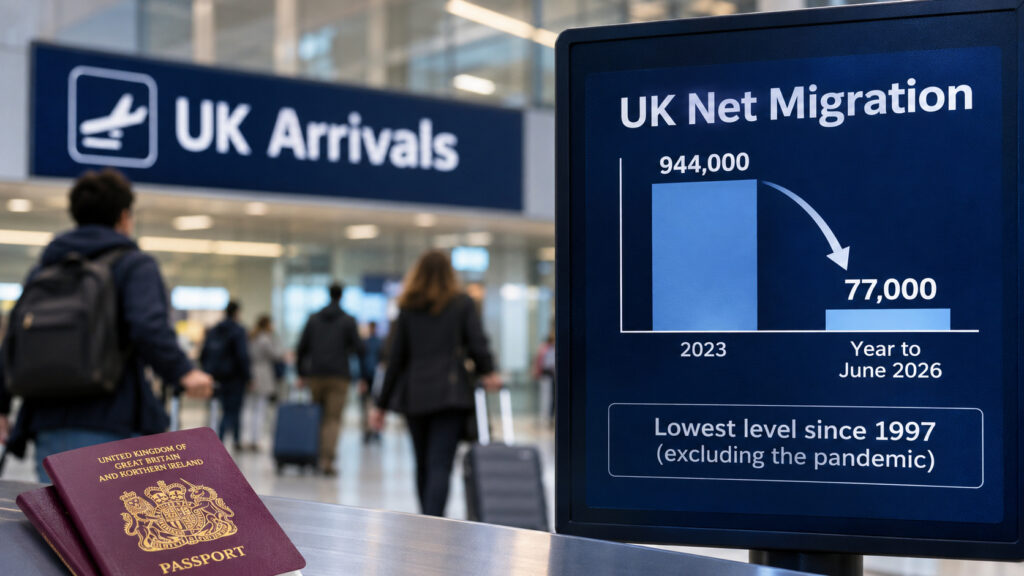
The latest figures published by the Office for National Statistics (ONS) reveal that UK net migration has fallen to 77,000 in the year ending June 2026, marking its lowest level since 1997, excluding the COVID-19 pandemic.
The substantial decline follows successive changes to UK immigration policy, including tighter work visa requirements, restrictions on dependants and increased salary thresholds for sponsored workers.
While the figures represent a significant shift in UK migration trends, concerns remain over the long-term implications for businesses, workforce availability and economic growth.
UK Net Migration Falls by Over 62% in a Year
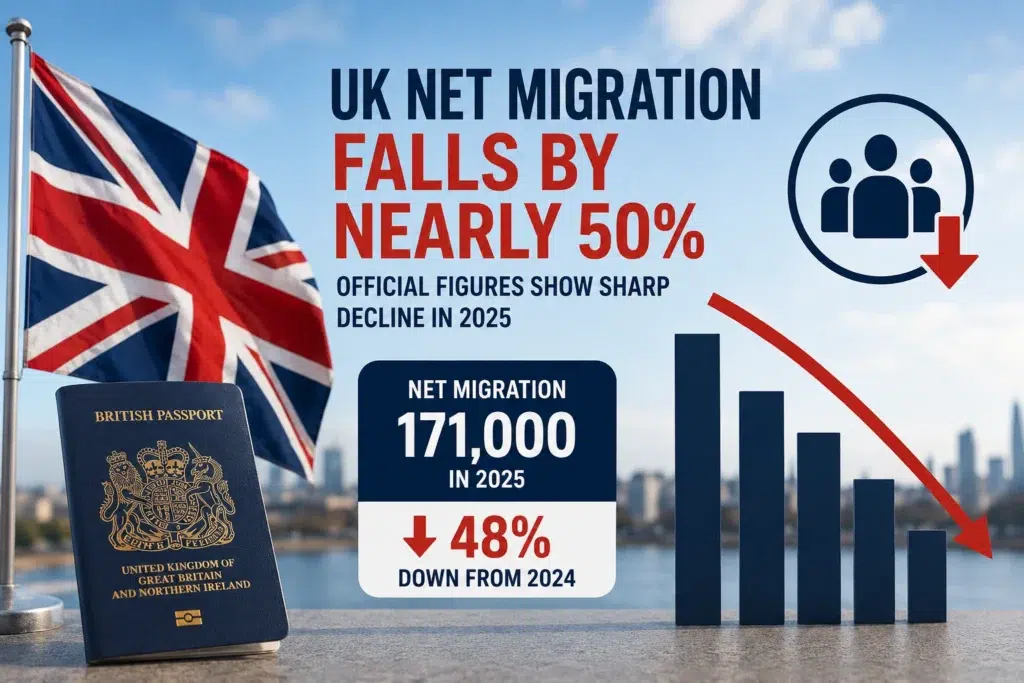
According to the latest ONS figures, annual net migration fell from 204,000 in the year ending June 2025 to 77,000 in the year ending June 2026, representing a decline of approximately 62%.
During this period:
- Approximately 738,000 people immigrated to the UK.
- Around 661,000 people emigrated from the UK.
- Annual net migration fell to 77,000.
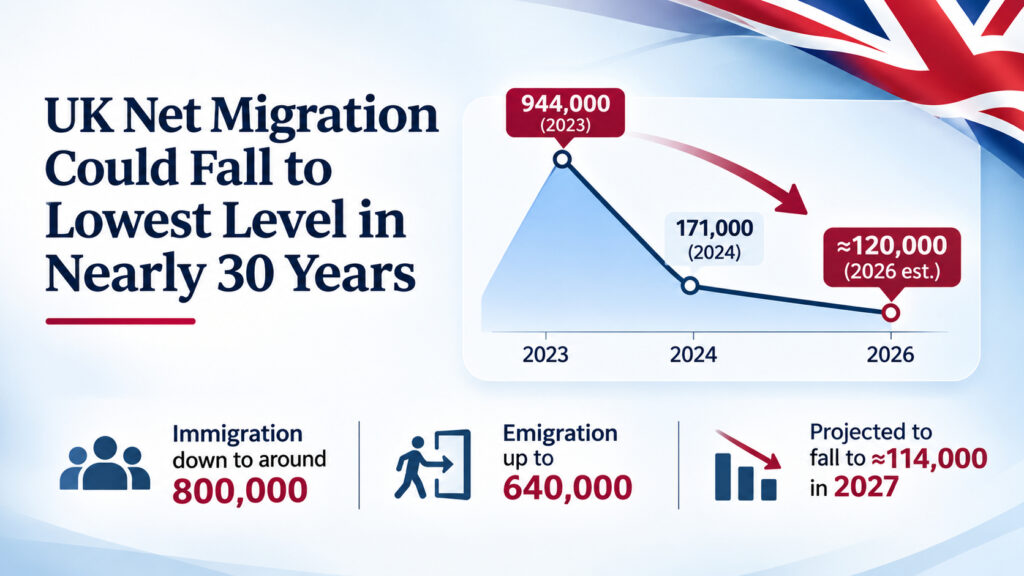
Net migration has now declined by approximately 90% from its record high of 944,000 in the year ending March 2023.
The latest figures also mark the achievement of a level of net migration that previous governments had sought to reach. In 2010, former Prime Minister David Cameron pledged to reduce annual net migration to the tens of thousands, a target his government was unable to achieve.
What Is Driving the Decline in UK Net Migration?
The reduction follows several immigration policy changes introduced by successive governments to limit migration through legal routes.
These include:
- Increased salary thresholds for Skilled Worker visa applicants.
- Restrictions on certain international students and sponsored workers bringing dependants to the UK.
- Tighter skill-level requirements for sponsored employment.
- Restrictions on overseas recruitment through certain immigration routes.
These measures have reduced the opportunities available to some prospective applicants seeking to work or study in the UK.
The government has also indicated its intention to introduce further immigration reforms, which could affect future migration levels.
Government Plans to Introduce Further Immigration Restrictions
Despite the substantial reduction in net migration, the government remains committed to further changes to the UK immigration system.
Earlier this month, the government announced plans to increase the standard qualifying period for indefinite leave to remain (ILR) from five to ten years under its Earned Settlement reforms.
The proposed changes are intended to place greater emphasis on an individual’s economic and social contribution when determining eligibility for permanent settlement.
Responding to the latest migration figures, Home Secretary Shabana Mahmood stated:
“Our reforms are restoring control and building a fairer immigration system that rewards contribution.”
However, immigration remains a prominent political issue. A recent YouGov poll identified immigration as the second most important concern among voters, behind the economy.
Could Falling Net Migration Affect the UK Economy?
Although lower migration figures may ease political pressure on the government, economists have raised concerns about the consequences of a sustained reduction in immigration.
International workers contribute to the UK labour market, particularly in sectors that experience domestic skills shortages. A continued decline in immigration could make recruitment more challenging for businesses and limit the growth of the working-age population.
Research published by Oxford Economics in April 2026 estimated that, if net migration were to remain at zero over the long term, the UK economy could be more than 15% smaller by 2060 compared with its baseline forecast.
Lower immigration could also affect tax revenues and government borrowing, even after accounting for reduced demand for certain public services.
The latest figures therefore raise questions about how the government intends to balance its immigration objectives with the UK’s economic and workforce requirements.
What Does This Mean for UK Employers and Visa Applicants?
With further immigration reforms expected, UK employers that rely on international recruitment should remain informed about changes to sponsorship requirements, salary thresholds and eligible occupations.
For prospective visa applicants and individuals already residing in the UK, understanding how forthcoming changes could affect their immigration options and eligibility for settlement will be equally important.
How Morgan Smith Immigration Can Help
At Morgan Smith Immigration, we provide professional immigration advice and assistance to individuals and businesses, tailored to their circumstances.
For assistance with your UK immigration matter, contact our team on 0203 959 3335 or email [email protected].
Follow Morgan Smith Immigration to stay updated on the latest UK immigration news, policy developments and changes to the Immigration Rules.