

UK universities are increasingly withdrawing offers made to international students amid concerns over rising Student visa refusal rates and stricter Home Office sponsorship requirements.
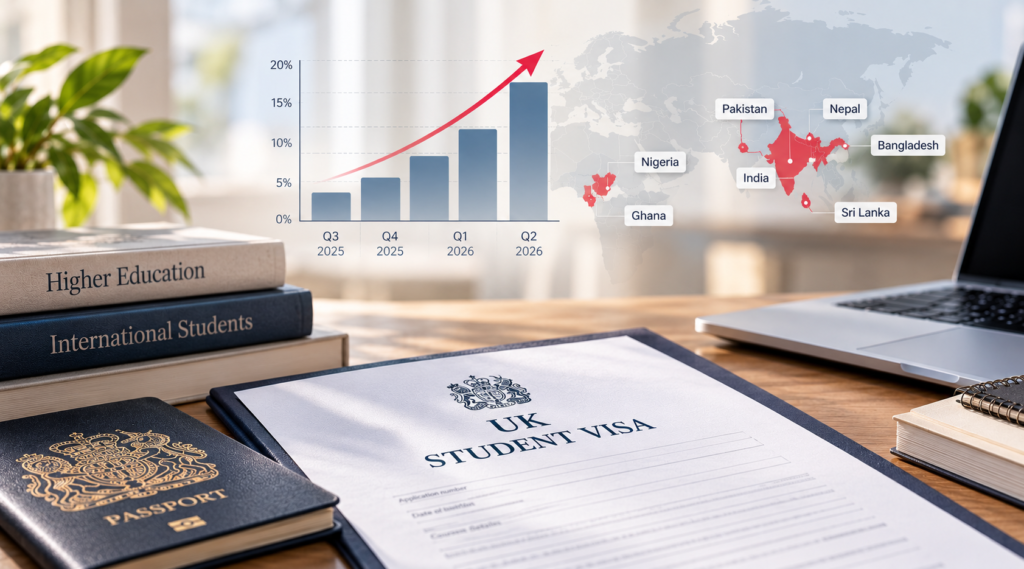
Applicants from Pakistan, Nigeria and Bangladesh have been particularly affected, with some universities suspending recruitment from certain countries altogether to protect their student sponsor licences.
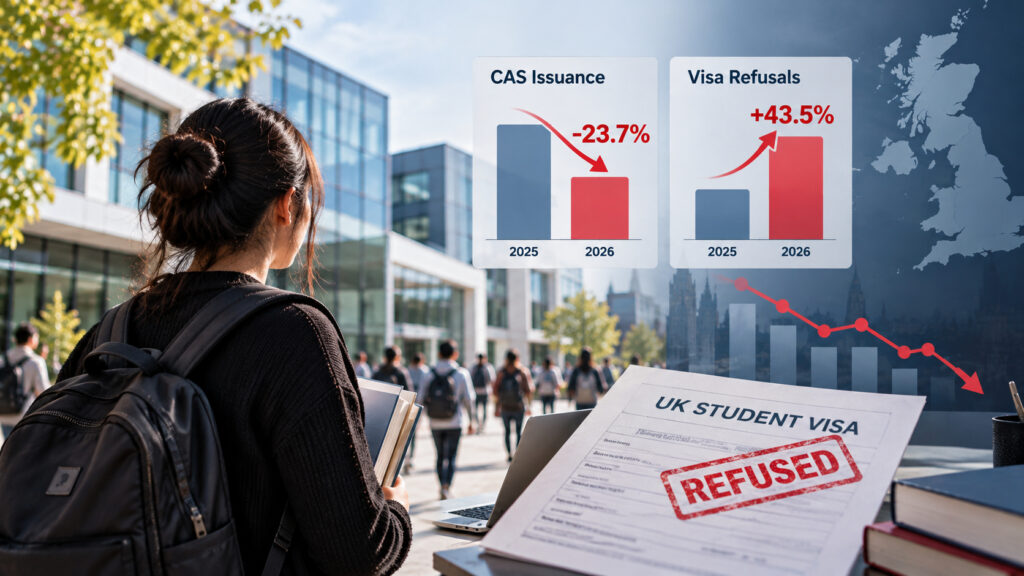
The development follows a doubling in the number of UK study visa refusals during the first six months of 2026 compared with the same period in 2025.
Significant Rise in UK Student Visa Application Withdrawals
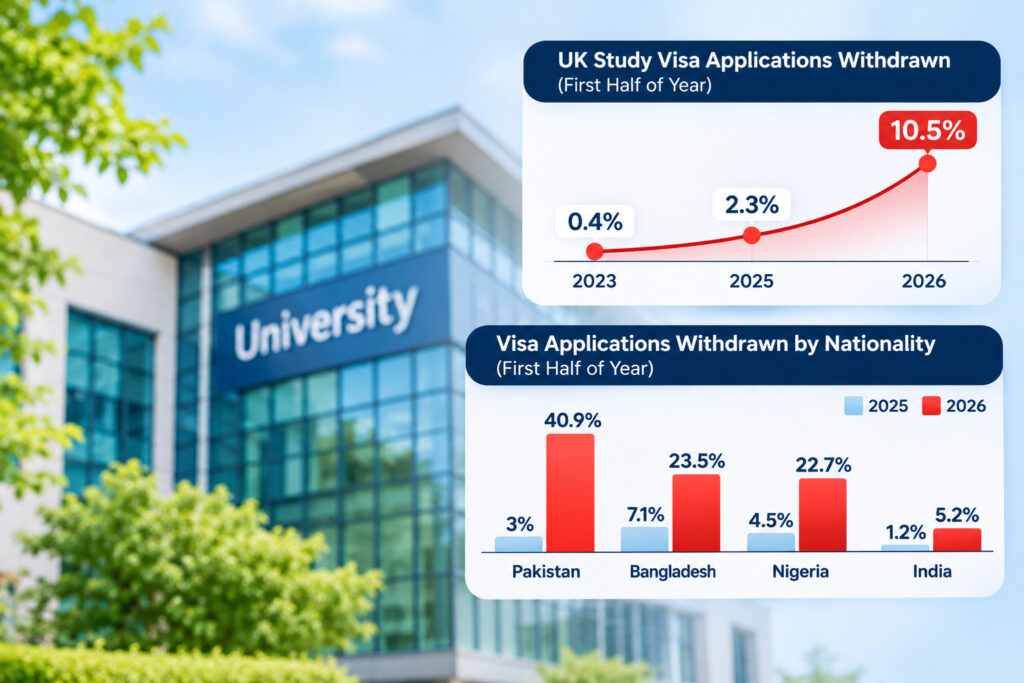
According to the Financial Times’ analysis of Home Office data, 10.5% of UK study visa applications were withdrawn during the first half of 2026, compared with 2.3% during the same period in 2025 and just 0.4% in 2023.
The increase has been particularly pronounced among applicants from the following countries:
| Nationality | January–June 2025 | January–June 2026 |
|---|---|---|
| Pakistan | 3% | 40.9% |
| Bangladesh | 7.1% | 23.5% |
| Nigeria | 4.5% | 22.7% |
| India | 1.2% | 5.2% |
Pakistan recorded a particularly sharp increase, with more than two in five study visa applications being withdrawn during the first six months of 2026.
Although visa applications may be withdrawn for various reasons, universities have identified the withdrawal of offers as a major factor behind these figures.
Approximately 15 UK universities are also reported to have suspended recruitment from Pakistan entirely this year.
Why Are UK Universities Withdrawing International Student Offers?
The increase in withdrawals is closely linked to stricter Home Office compliance requirements for educational institutions sponsoring international students.
Previously, universities were required to maintain a visa refusal rate below 10%. However, the threshold has now been tightened to below 5%.
Universities that fail to meet the required compliance standards could face restrictions on their ability to sponsor international students or risk losing their student sponsor licence.
According to data from Enroly, a company that supports international student recruitment and visa processing, almost half of universities have refusal rates exceeding the 5% threshold.
As a result, some institutions are adopting more restrictive recruitment practices and withdrawing offers from applicants they consider more likely to face visa refusals.
Universities Raise Concerns Over Student Visa Refusals
Several senior figures in the higher education sector have expressed concerns about the consistency and reasoning behind recent Home Office visa decisions.
Universities have reported cases in which applications were refused because:
- Applicants had previously considered studying in another country.
- A PhD applicant was unable to identify course modules despite applying for a research-based degree.
- An applicant’s understanding of their university’s location was questioned during an interview.
University representatives have argued that inconsistent decision-making makes it increasingly difficult for institutions to manage their sponsorship compliance obligations.
The Home Office, meanwhile, has maintained that international students make a valuable contribution to the UK but that educational institutions must recruit responsibly to protect the integrity of the immigration system.
Financial Implications for UK Universities
International student fees represent an important source of income for many UK universities.
With overseas recruitment already under pressure from stricter immigration requirements and growing international competition, further reductions in student numbers could have significant financial consequences.
Higher education leaders have warned of potential job losses, course closures, institutional restructuring and campus closures.
There are also concerns that universities may become increasingly dependent on recruitment from countries with comparatively lower visa refusal rates, reducing the diversity of their international student populations.
What Does This Mean for International Students?
Prospective international students may face stricter university admission procedures, additional credibility assessments and more extensive document checks before receiving a Confirmation of Acceptance for Studies (CAS).
Receiving a university offer does not guarantee that a CAS will be issued or that a Student visa application will be successful.
Applicants should ensure that they:
- Provide accurate and consistent information throughout the application process.
- Meet the relevant financial and English language requirements.
- Understand their chosen course, university and reasons for studying in the UK.
- Check whether their chosen university has introduced any changes to its international recruitment policies.
The reported recruitment suspensions are decisions taken by individual universities and do not constitute a nationwide ban on Student visa applications from the affected countries.
How Morgan Smith Immigration Can Help
At Morgan Smith Immigration, we provide professional immigration advice and assistance to individuals and businesses, tailored to their circumstances.
If you require assistance with your UK visa application, contact our experienced team on 0203 959 3335 or email [email protected].
Follow Morgan Smith Immigration to stay updated on the latest UK immigration news and changes to immigration requirements.