


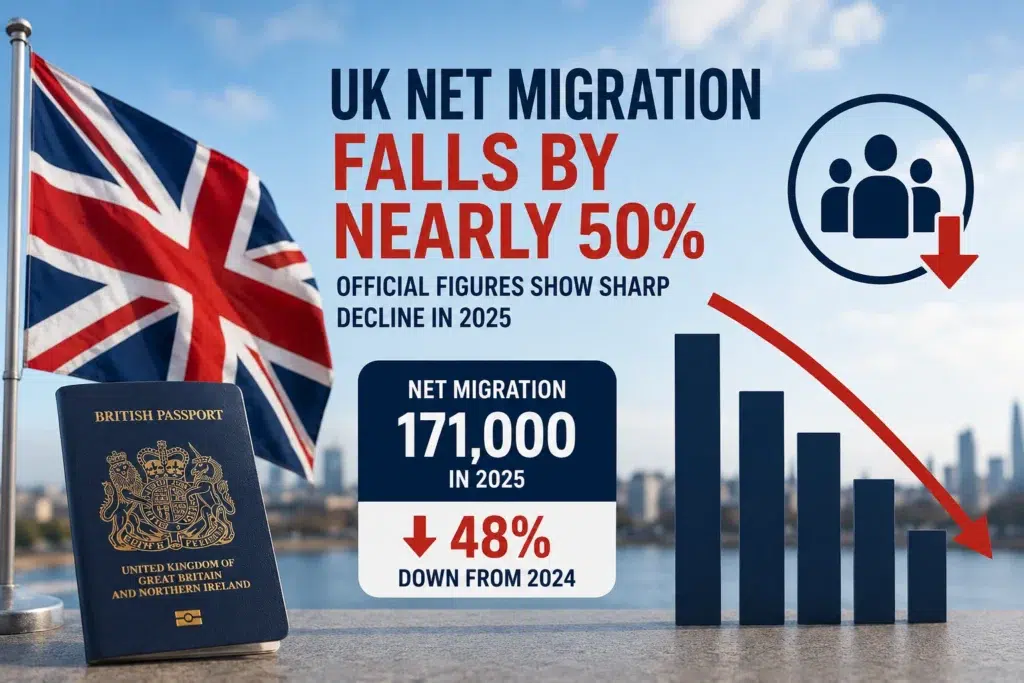
UK Net Migration fell significantly last year, according to newly published official figures, marking one of the sharpest annual reductions in recent years. Data released by the Office for National Statistics (ONS) showed UK net migration dropped to 171,000 in 2025, representing a fall of almost 50 per cent compared with 331,000 recorded in 2024.
The figures continue a sustained downward trend following the record high of 944,000 reported in 2023 and are likely to be viewed by the Government as evidence that tighter immigration controls are beginning to take effect.
The latest statistics arrive at a time when immigration remains one of the most politically sensitive issues in the country, particularly amid growing pressure from Reform UK and increasing public scrutiny over border control policies.
Fewer Overseas Workers Driving the Reduction
The primary factor behind the decline was a substantial reduction in non-EU nationals entering the UK for employment purposes. The ONS confirmed that work-related arrivals from outside the European Union fell by 47% during 2025.
Changes introduced under the previous Conservative administration, including stricter salary thresholds and tighter sponsorship requirements, have continued under the current Labour government. Additional restrictions introduced by Home Secretary Yvette Cooper and Justice Secretary Shabana Mahmood have further limited certain immigration routes.
A particularly notable decline was recorded in the number of dependants accompanying international students. Since 2023, grants issued to family members of overseas students have reportedly fallen by 87 per cent following restrictions on postgraduate dependant visas.
While immigration levels reduced sharply, overall emigration figures saw only a modest decrease, contributing to the overall fall in net migration.
Asylum Hotel Numbers Also Reduced
Separate Home Office data indicated that the number of asylum seekers housed in hotels has also declined considerably. As of the end of March 2026, approximately 20,885 asylum seekers remained in hotel accommodation, representing a 35 per cent reduction compared with the previous year.
Officials attributed much of the decrease to efforts aimed at clearing the backlog of outstanding asylum applications. During the first quarter of 2026 alone, the number of asylum seekers accommodated in hotels reportedly fell by nearly 9,800.
The Government has repeatedly stated its intention to end the use of asylum hotels before the end of the current parliamentary term.
Asylum Applications Remain Historically High
Although asylum claims decreased by 12 per cent in the year ending March 2026, overall numbers remain elevated when compared with historical averages. Home Office figures recorded approximately 94,000 asylum applications during the period.
At the same time, approval rates for initial asylum decisions continued to decline. Grant rates fell from 49% in the year ending March 2025 to 39% in the following year, reflecting a tougher approach to asylum assessments.
Despite reductions in irregular migration and asylum accommodation pressures, refugee organisations have expressed concern regarding the shrinking number of safe and legal routes available to vulnerable individuals seeking protection in the UK.
Recent data suggests that the number of refugees arriving through official resettlement schemes has fallen to around 3,600, approximately half the level seen previously.
Experts Warn of Economic Consequences
Migration specialists have cautioned that headline figures alone do not provide a complete picture of the broader economic impact.
Ben Brindle, a researcher at the Migration Observatory at the University of Oxford, noted that the reduction has been concentrated among groups generally considered economically beneficial, including skilled workers and student dependants.
He suggested that categories of migration most associated with economic contribution are often easier to restrict through policy changes, whereas asylum-related migration remains less responsive to government intervention.
Experts have also warned that labour shortages in sectors such as healthcare, hospitality and social care may intensify if overseas recruitment continues to decline.
Public Perception Still Divided
Despite the substantial reduction in migration levels, recent research by the think tank British Future found that many members of the public continue to believe immigration is increasing.
The study highlighted a significant gap between public perception and official data, suggesting that concerns surrounding migration remain deeply embedded within political debate regardless of the statistical trend.
Prime Minister Keir Starmer welcomed the latest figures, stating that they demonstrated progress towards restoring greater control over the UK’s borders.
Meanwhile, the Conservative Party argued that immigration levels remain excessively high and called for further measures to reduce arrivals.
Continued Focus on Immigration Reform
The Government has indicated that further reforms to the immigration system are likely in the coming months, with ministers placing increased emphasis on skills-based migration and reducing reliance on overseas labour.
With immigration expected to remain central to national political debate ahead of future elections, the latest figures are likely to intensify discussions surrounding border control, economic growth and the long-term direction of UK immigration policy.
Follow us to stay updated on changes to UK immigration law, policy developments and guidance affecting migrants, employers and families.
With over 20 years of experience and a commitment to excellence, Morgan Smith Immigration is your trusted partner for all your immigration needs. Contact us today to learn more about how we can assist you with UK visa applications. For enquiries or assistance, call us at 0203 959 3335 or email [email protected].