
Immigration Rules

Filter posts by category

Home Office documents marked with a red ‘BREACH’ stamp beside a warning symbol, illustrating the consequences of breaching an FNO conditional caution in the UK.

What Happens If You Breach an FNO Conditional Caution?

Failing to comply with a Foreign National Offender (FNO) conditional caution can result in criminal prosecution for the original offence. However, not every difficulty in meeting the conditions necessarily results in prosecution. The Home Office guidance explains how authorities monitor compliance, investigate breaches and assess circumstances that may prevent an individual from leaving the UK.

What Happens If You Breach an FNO Conditional Caution? Read More »

UK visa rules for modern slavery victims allowing recognised Skilled Worker visa holders to leave abusive employers and seek alternative employment.

New UK Visa Rules Allow Modern Slavery Victims to Leave Abusive Employers

Victims of modern slavery on Skilled Worker visas can now leave exploitative employers and take up alternative employment without putting their immigration status at risk. UK Government has introduced new immigration rules allowing recognised victims of modern slavery on Skilled Worker visas to work for any employer for the remainder of their existing visa. The

New UK Visa Rules Allow Modern Slavery Victims to Leave Abusive Employers Read More »
What Happens If You Fail to Attend a Home Office Interview or Provide Requested Information?

Missing a Home Office interview or failing to provide requested information could put your UK visa application at risk. Under Part Suitability of the Immigration Rules, the Home Office may refuse an application if an applicant fails to comply with certain requirements without a reasonable excuse.

What Happens If You Fail to Attend a Home Office Interview or Provide Requested Information? Read More »
Penalty notice on a car alongside a British passport, illustrating driving offences and their potential impact on an ILR application.

Can Driving Offences Affect an ILR Application?

A driving offence does not automatically prevent someone from obtaining Indefinite Leave to Remain (ILR) in the UK. However, the consequences can depend on the nature of the offence, how it was dealt with and the sentence or penalty imposed. More serious offences, or a pattern of repeated offending, can engage the criminality provisions under Part Suitability of the Immigration Rules.

Can Driving Offences Affect an ILR Application? Read More »

Victim of Domestic Abuse Route changes extending settlement eligibility to certain adult dependent children from 8 October 2026, illustrated with legal documents and scales of justice.

Victim of Domestic Abuse Route Extended to Adult Children from 8 October 2026

From 8 October 2026, an important change to the UK’s Victim of Domestic Abuse route will allow certain adult dependent children to apply for settlement where domestic abuse has permanently broken down their family relationship. The change forms part of the Statement of Changes to the Immigration Rules HC 584, published on 3 September 2026 and amends Appendix Victim of Domestic Abuse (Appendix VDA).

Victim of Domestic Abuse Route Extended to Adult Children from 8 October 2026 Read More »

Work-Based Immigration Inquiry examining UK workforce recruitment, skills and Skilled Worker visa policy.

Home Affairs Committee Launches Work-Based Immigration Inquiry

The Home Affairs Committee has launched a new inquiry into the UK’s approach to work-based immigration. Announced on 15 September 2026, the inquiry will examine how work migration policy supports the UK labour market. It will also consider its relationship with domestic recruitment, skills and workforce training.

Home Affairs Committee Launches Work-Based Immigration Inquiry Read More »

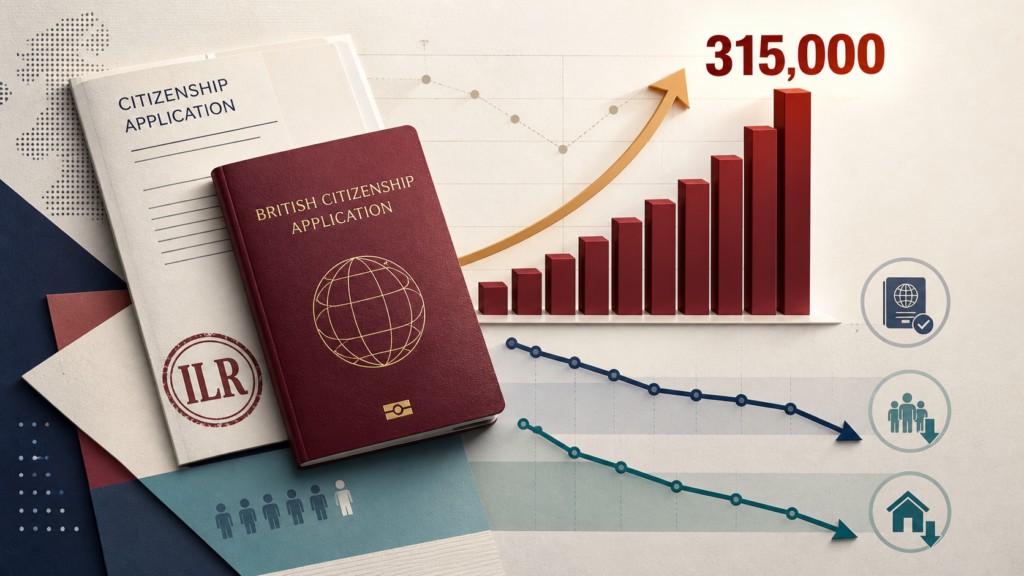
UK immigration fees illustrated by rising costs, British citizenship documents and Home Office application fees.

UK Immigration Fees Generate Billions as Questions Grow Over the Cost of Citizenship

UK immigration application fees have increased significantly over recent years. New scrutiny of Home Office income has now renewed questions about how immigration and citizenship fees are set. Recent reporting by the Bureau of Investigative Journalism (TBIJ) examined the difference between application fees and their administrative costs. It reported that visa, citizenship and other immigration-related charges generated billions beyond their direct processing costs.

UK Immigration Fees Generate Billions as Questions Grow Over the Cost of Citizenship Read More »

Statement of Changes HC 584 represented by an official folder, eVisa screen, key dates and employment, study, family and settlement symbols.

Statement of Changes to the Immigration Rules: HC 584, 3 September 2026

UK Home Office published a new Statement of Changes to the Immigration Rules on 3 September 2026. HC 584 introduces changes affecting several UK immigration routes and applicant groups. First, it provides new protections for Skilled Workers recognised as victims of modern slavery. It also addresses adult dependent children affected by domestic abuse and Hong Kong BN(O) families. Additionally, it changes provisions for EUSS applicants, students, visitors and Erasmus+ participants.

Statement of Changes to the Immigration Rules: HC 584, 3 September 2026 Read More »

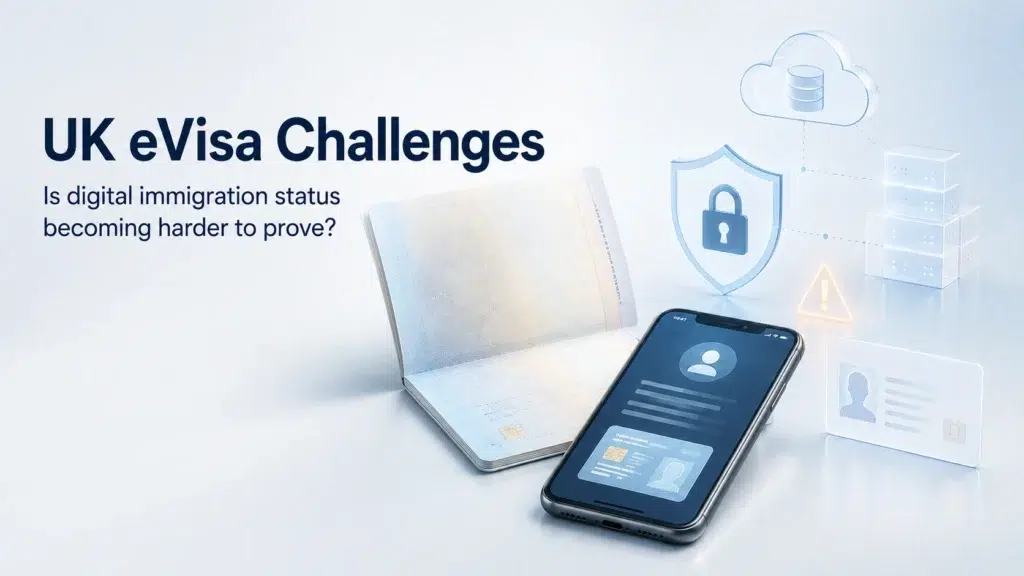
UK eVisa challenges illustrated by a digital immigration record on a smartphone, passport, identity card, security shield and system warning.

Does the UK eVisa System Work for Everyone, or Is It Making Immigration Status Harder to Prove?  

UK Home Office presents the eVisa as a safer and more convenient way to prove immigration status. More than 10 million people now use digital status. For many, the system works as intended. However, digitalisation has also placed a considerable practical burden on migrants.

Does the UK eVisa System Work for Everyone, or Is It Making Immigration Status Harder to Prove?   Read More »

Multi-Factor Authentication for SMS users, showing password and one-time passcode verification protecting sponsor licence records.

Mandatory Multi-Factor Authentication (MFA) for Sponsorship Management System Users

UK Home Office has announced that it will introduce mandatory Multi-Factor Authentication (MFA) for all Sponsorship Management System (SMS) users. The phased rollout will begin on 3 September 2026 and is expected to cover all sponsor licence holders by November 2026. Once MFA is enabled, SMS users must enter a one-time passcode alongside their username and password whenever they access the system.

Mandatory Multi-Factor Authentication (MFA) for Sponsorship Management System Users Read More »

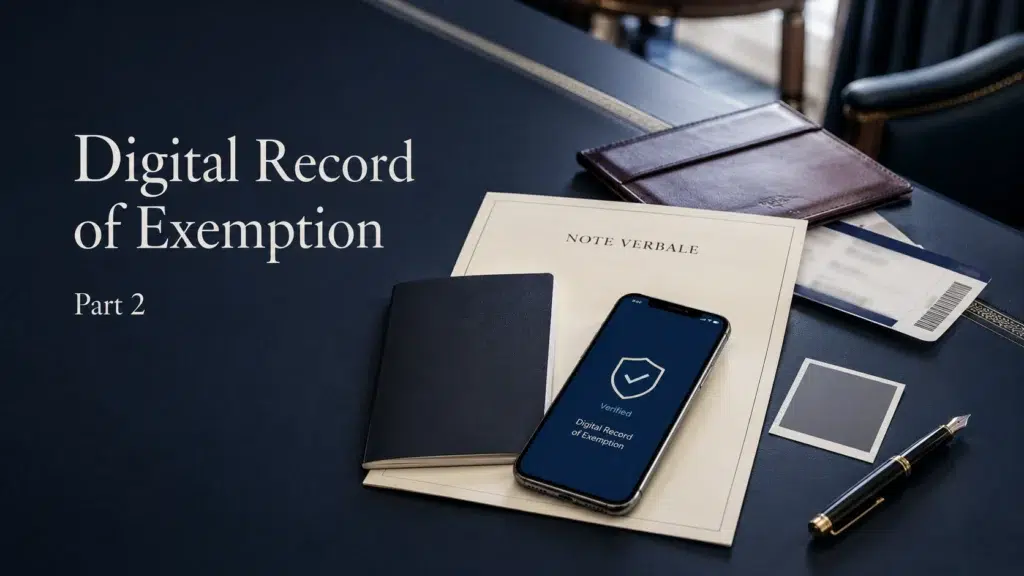
Digital record of Exemption for Diplomats displayed with a Note Verbale, passport, photograph and travel documents.

Digital Record of Exemption for Diplomats: Application, Documents and Costs

In Part 1 of our guide to UK Immigration Exemption for Diplomats, we examined who may qualify for exemption from UK immigration control during a diplomatic posting, the position of eligible family members and the rights and limitations associated with exempt status. Part 2 focuses on the practical process of obtaining a digital record of

Digital Record of Exemption for Diplomats: Application, Documents and Costs Read More »

A diplomat with his spouse and child entering a London government building, illustrating Immigration Exemption for Diplomats in the UK.

UK Immigration Exemption for Diplomats: Eligibility, Rights and Family Members

Foreign diplomats and certain diplomatic mission personnel posted to the United Kingdom are exempt from immigration control while carrying out their official duties. This allows them to enter, live in and travel from the UK without obtaining immigration permission for the duration of their posting.

UK Immigration Exemption for Diplomats: Eligibility, Rights and Family Members Read More »

Immigration law graphic featuring Jawad Ahmad, scales of justice, a passport and compliance documents, highlighting accountability and public protection.

When Immigration Control Fails to Protect the Public: The Questions Raised by the Jawad Ahmad Case 

The removal of Dr Jawad Ahmad from the UK medical register raises questions extending beyond professional misconduct. It exposes possible gaps between immigration control, employer sponsorship, criminal investigations and public protection. 

When Immigration Control Fails to Protect the Public: The Questions Raised by the Jawad Ahmad Case  Read More »

Scroll to Top