


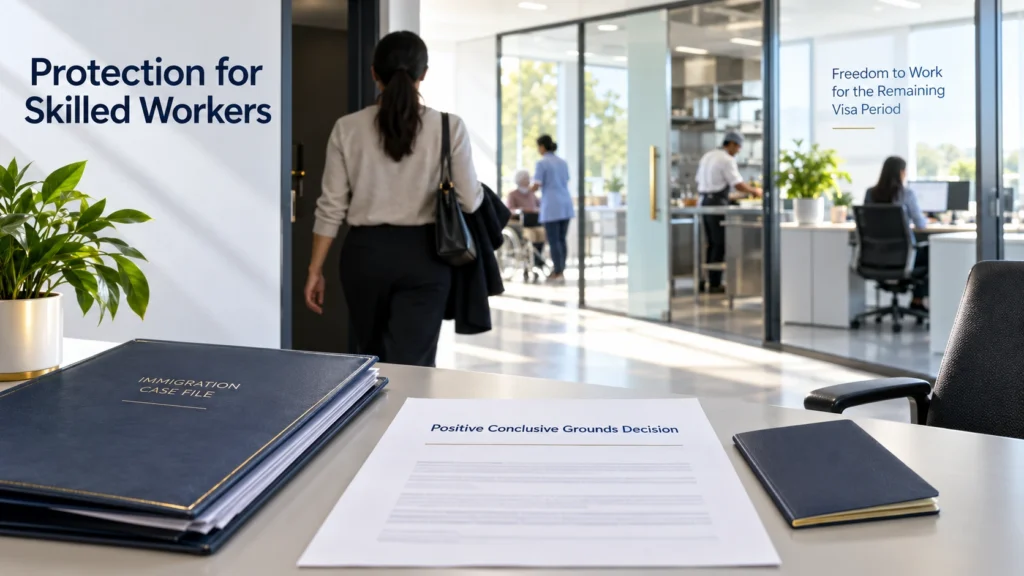
Skilled Workers who have been subjected to modern slavery will soon be able to leave an abusive employer without immediately losing their right to work in the UK. Changes announced by the Home Office will allow eligible workers to undertake almost any type of employment for the remainder of their existing Skilled Worker permission. The change will take effect on 8 October 2026 and is intended to prevent employers from using immigration sponsorship as a means of controlling vulnerable workers.
Why is the Skilled Worker route being changed?
A Skilled Worker visa is normally granted for a particular job with a licensed sponsor. The worker’s permission is subject to conditions that restrict the work they can undertake.
Changing employer will usually require the worker to obtain sponsorship for the new role and make a fresh visa application before starting that employment.
This can leave workers in a particularly difficult position where their sponsor is exploiting them. A worker may fear that reporting abuse or leaving their employment will place their immigration status at risk.
UK Home Office has acknowledged that unscrupulous employers can use the sponsorship system to exploit vulnerable workers. The new provision aims to protect those formally recognised as victims of modern slavery from this pressure.
Who will qualify under the new rule?
The provision will not apply to every sponsored worker who experiences poor treatment at work.
To qualify, a Skilled Worker must:
- Have been referred to the National Referral Mechanism;
- Have received a positive Conclusive Grounds decision; and
- Have received that decision during their most recent period of Skilled Worker permission.
A Conclusive Grounds decision is a formal finding by a Home Office competent authority that, on the evidence available, the individual is a victim of modern slavery.
A referral into the National Referral Mechanism, or an initial Reasonable Grounds decision, will not by itself satisfy the wording of the new Immigration Rule.
What is the National Referral Mechanism?
The National Referral Mechanism is the UK framework for identifying victims of modern slavery and helping them access appropriate support.
Adults must normally give informed consent before entering the NRM. An authorised first responder organisation must make the referral. This may include the police, a local authority, certain Home Office departments or a designated charity.
The process includes a Reasonable Grounds decision, which is an initial assessment of whether the person may be a victim. The relevant Home Office competent authority then makes a Conclusive Grounds decision to determine whether it formally recognises the person as a victim of modern slavery.
Under the new Skilled Worker provision, the individual must have received a positive Conclusive Grounds decision during their most recent period of permission. A referral or positive Reasonable Grounds decision alone will not meet this requirement.
What work will be permitted?
Under the new rule, an eligible worker may have their visa conditions amended to permit:
- Employment with another organisation;
- Work that is not sponsored;
- Self-employment; and
- Voluntary work.
The only express occupational exclusion is work as a professional sportsperson, including employment as a sports coach.
This represents a significant departure from the usual conditions of the Skilled Worker route. It means an eligible individual will not necessarily have to secure a new licensed sponsor before leaving the employer connected to their existing visa.
However, the wording of the rule states that the worker may have their conditions amended. It should therefore not be assumed that receiving a positive Conclusive Grounds decision automatically changes the conditions attached to the person’s immigration permission.
UK Home Office has confirmed that operational guidance will be updated when the change takes effect.
How long will the amended permission last?
The amended work conditions will apply for the remaining duration of the individual’s existing Skilled Worker permission.
The new provision changes the types of work an eligible person may undertake. It does not provide a further period of immigration permission or extend the expiry date of their existing visa.
A worker who wishes to remain in the UK after their current permission expires will need to consider their immigration options separately. The appropriate application will depend on their individual circumstances, and legal advice should be obtained before their existing permission ends.
What does the change mean for employers?
An employer recruiting a worker under the new provision must conduct the appropriate right to work check before employment begins. The check should confirm that the individual is permitted to undertake the work offered and establish whether their right to work is time limited.
A positive Conclusive Grounds decision confirms that the person has been recognised as a victim of modern slavery. It should not, by itself, be treated as evidence of their current right to work or the conditions attached to their immigration permission.
Licensed sponsors must comply with their sponsorship duties and wider UK law. A failure to do so can result in compliance action, including the downgrading, suspension or revocation of the sponsor licence. Where the Home Office believes that a criminal offence may have occurred, the matter may also be reported to the police or another relevant authority.
How Morgan Smith Immigration Can Help
In times of uncertainty, trusted legal guidance is essential. At Morgan Smith Immigration, we bring over two decades of experience and a steadfast commitment to excellence. Whether you have experienced exploitation as a sponsored worker, need advice about your immigration status or require assistance with any UK visa category, our team is here to help.
Call us on 0203 959 3335 or email [email protected] to discuss your circumstances. Follow Morgan Smith Immigration for the latest updates affecting sponsored workers and UK employers.