


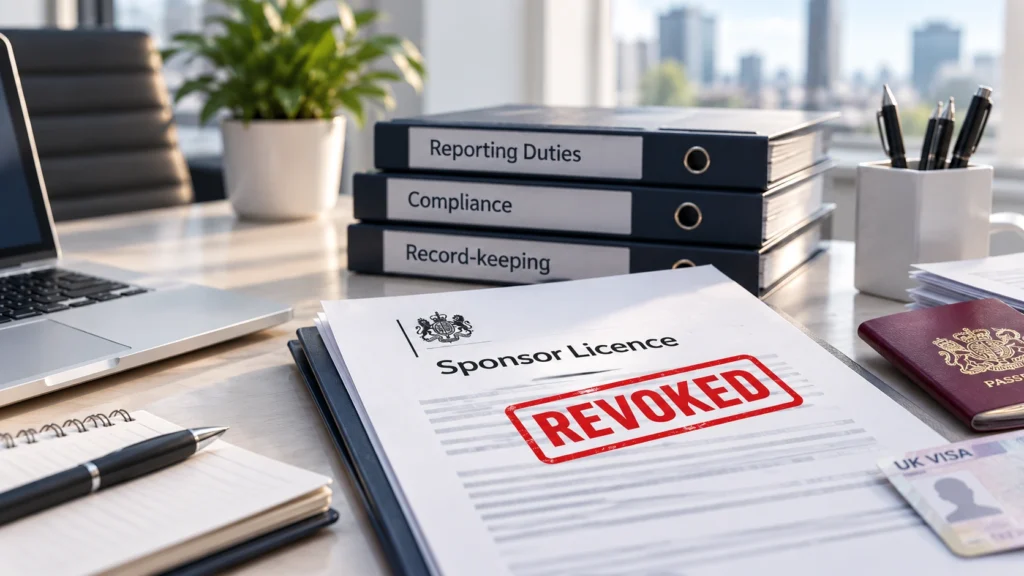
Sponsor licence compliance has become an increasingly serious issue for UK employers. Much of the recent attention has focused on enforcement within the adult social care sector. Concerns about worker exploitation, underpayment and misuse of sponsorship have resulted in considerable scrutiny of care providers.
However, sponsor compliance is not simply a care sector issue.
Every organisation holding a sponsor licence must comply with Home Office reporting, monitoring and record-keeping requirements. A failure which an employer considers administrative can still place its sponsor licence at risk.
The recent High Court judgment in Moon Fish Ltd v Secretary of State for the Home Department [2026] EWHC 2289 (Admin) provides an important example. The case concerned a relatively straightforward reporting failure. However, it resulted in the immediate revocation of the company’s sponsor licence and ultimately led to judicial review proceedings.
What Happened in the Moon Fish Case?
Moon Fish Limited held a sponsor licence and employed three sponsored workers. One of those workers, Mr Riaz, took unpaid compassionate leave between 27 April and 22 June 2025. As a result of his absence, he received reduced salary than stated on certificate of sponsorship.
There was no dispute that the unpaid leave and reduced payment were lawful under employment law. The Court also recorded that, by themselves, they did not breach the sponsorship rules.
The problem was that Moon Fish had not reported the reduced payment or period of unpaid leave to the Home Office.
The company accepted that this amounted to a breach of its sponsor reporting obligations.
In October 2025, the Home Office requested employment documents, including salary records. Moon Fish provided the requested information but did not explain why the worker had received less than his stated salary.
The Home Office did not seek a further explanation.
On 18 November 2025, the company’s sponsor licence was revoked with immediate effect. The Home Office concluded that the worker had been underpaid without the matter being reported.
Moon Fish subsequently explained that the reduction resulted from unpaid compassionate leave and that the failure to report it had been an innocent error. The company challenged the revocation through judicial review.
Why Did the High Court Allow the Appeal?
One of the central issues was the Home Office’s interpretation of Annex C1(aa) of the sponsor guidance. This provision provides a mandatory ground for revocation in specified circumstances. Specifically, it applies where a sponsored worker is paid less than stated on their Certificate of Sponsorship.
The Home Office treated Mr Riaz’s lower payments, together with Moon Fish’s failure to report them, as falling within this provision. The High Court disagreed. The Court distinguished between a change to a worker’s salary and receiving less pay. In this case, the worker received less pay because of an agreed period of unpaid leave. Importantly, the Court found that legitimate unpaid leave did not amount to a “change of salary” under the relevant part of Annex C1(aa).
However, this did not mean Moon Fish had complied with its sponsor duties.The company accepted that Mr Riaz had been absent without pay. Notably, his absence lasted more than four weeks. Therefore, it should have been reported to the Home Office.
The Court considered this to be a sponsor compliance reporting failure. As a result, it fell within the provisions under Annex C2. It did not fall under the mandatory revocation ground relied upon by the Home Office.
The distinction was significant. Annex C1 set out circumstances in which the Home Office would revoke a sponsor licence, while the relevant ground under Annex C2 was not mandatory.
Was the Sponsor Given a Proper Opportunity to Explain?
A further issue before the High Court concerned procedural fairness. The Home Office initially contacted Moon Fish requesting employment documents after raising concerns about whether sponsored workers were receiving the salaries stated on their Certificates of Sponsorship.
Moon Fish provided the requested documents. However, the Home Office did not identify the particular payments to Mr Riaz that concerned it or ask the company to explain why his pay had been lower.
The Home Office subsequently relied on those payments when deciding to revoke the sponsor licence. The High Court found that this process was unfair. The Home Office had not sufficiently identified the substance of its concerns or given Moon Fish a reasonable opportunity to respond before revoking the licence.
Had the specific concern been raised, Moon Fish could have explained that Mr Riaz had been on unpaid compassionate leave. This did not mean Moon Fish had complied with all its sponsor duties. The company accepted that it had failed to report the relevant unpaid absence.
However, the Court found that the Home Office had moved too quickly from identifying a potential concern to revoking the licence without first giving the sponsor a proper opportunity to address it.
Wider Relevance for Sponsor Licence Holders
Recent scrutiny of sponsor compliance has often focused on the adult social care sector. However, Home Office compliance requirements are not limited to care providers.
Organisations holding sponsor licences under the Worker and Temporary Worker routes have ongoing reporting, record-keeping and monitoring duties.
Where UKVI identifies compliance concerns, it can take action against a sponsor licence. Depending on the circumstances, this can include reducing a sponsor’s Certificate of Sponsorship allocation, downgrading or suspending the licence, or revoking it.
The Moon Fish judgment is therefore relevant to sponsors across different sectors. It shows how a reporting failure involving one sponsored worker can develop into serious action against the sponsor licence.
Employers should not assume that an administrative error will have no consequences simply because it was unintentional. Sponsor compliance procedures should be capable of identifying reportable events and ensuring they are dealt with within the required timescales.
Unpaid Leave: What Sponsors Must Report
The Moon Fish judgment also provides a useful reminder about unpaid absence. Under current Home Office guidance, sponsors must normally stop sponsoring a worker who is absent from work without pay, or on reduced pay, for more than four weeks in total during a calendar year, unless an exception applies.
The four-week limit can be reached through a single period of absence or several periods taken during the year. Where a sponsored worker’s unpaid or reduced-pay absence exceeds four weeks, the sponsor must report the circumstances to the Home Office. Relevant changes must generally be reported within 10 working days.
Certain types of absence are exempt from the usual four-week restriction. These include specified statutory family leave, sick leave, jury service and other circumstances set out in the sponsor guidance.
Sponsors should also distinguish authorised unpaid leave from unauthorised absence. If a sponsored worker is absent without permission for more than 10 consecutive working days, the sponsor must report this to the Home Office, even if it intends to continue sponsoring the worker.
Accurate absence records are therefore an important part of sponsor compliance. Employers should ensure that those responsible for HR, payroll and sponsorship can identify when an absence triggers a Home Office reporting requirement.
Reporting Changes Through the Sponsor Management System
The Home Office requires certain changes concerning sponsored workers to be reported within specified timescales. According to the current sponsor guidance, changes to a sponsored worker’s circumstances must generally be reported within 10 working days of the relevant event.
This includes circumstances such as:
- unpaid or reduced-pay absence exceeding the relevant period;
- an unauthorised absence lasting more than 10 consecutive working days;
- certain reductions in salary or pay;
- significant changes to the worker’s employment;
- changes to the worker’s normal work location; and
- circumstances where the organisation stops sponsoring the worker.
Sponsors should also remember that a salary reduction unrelated to absence may create separate reporting and immigration issues. Depending on the circumstances and immigration route, the employer may need to consider whether the revised salary continues to satisfy the relevant salary requirements.
Sponsor Compliance Requires More Than Paying the Correct Salary
Salary and absence reporting are only part of a sponsor’s responsibilities. The Home Office expects sponsors to have appropriate systems for monitoring sponsored workers and meeting their reporting and record-keeping duties.
In practice, employers should ensure that those responsible for sponsorship can identify events which may require action under the sponsor guidance.
This includes keeping accurate records of attendance and absences, monitoring salary payments against sponsorship information and ensuring relevant changes are reported within the required timescale.
Employers should also ensure that the people responsible for payroll, HR and sponsor management communicate effectively.
A payroll change may appear routine to the person processing it. However, where it concerns a sponsored worker, it may have immigration consequences which also need to be considered.
Home Office Requests Should Be Treated Carefully
The Moon Fish case also demonstrates the importance of responding carefully to Home Office enquiries. Providing the documents requested may not always be enough.
If payroll records, attendance information or other documents could appear inconsistent with information previously provided to the Home Office, sponsors should consider whether an explanation and supporting evidence are required.
Protecting Your Sponsor Licence
Holding a sponsor licence brings continuing responsibilities. Compliance should therefore be treated as an ongoing process rather than something considered only when a Home Office audit takes place.
The Moon Fish judgment is an important reminder that even where the underlying circumstances are legitimate, failing to report them correctly can create significant difficulties.
At the same time, the judgment confirms the importance of properly identifying the nature of an alleged breach and following a fair process where serious enforcement action is being considered.
For employers across all sectors, careful reporting, accurate records and effective internal compliance systems remain essential.
Follow Morgan Smith Immigration for updates on UK immigration law, sponsor compliance and official Home Office guidance affecting employers and sponsored workers.
With more than 20 years of experience in UK immigration matters, Morgan Smith Immigration is committed to providing professional advice and maintaining high standards of client care.
Book a sponsor licence mock audit with Morgan Smith Immigration to identify potential compliance issues before they result in enforcement action.
For advice on sponsor duties, a Home Office investigation, licence suspension or revocation, call 0203 959 3335 or email [email protected].