

Skilled Workers in the UK who experience modern slavery or serious workplace exploitation can report their concerns to the Fair Work Agency (FWA). The agency investigates reports of serious abuse and may refer eligible individuals to the National Referral Mechanism (NRM).
From 8 October 2026, changes to the UK Immigration Rules also provide additional protection for Skilled Workers who are formally recognised as victims of modern slavery.
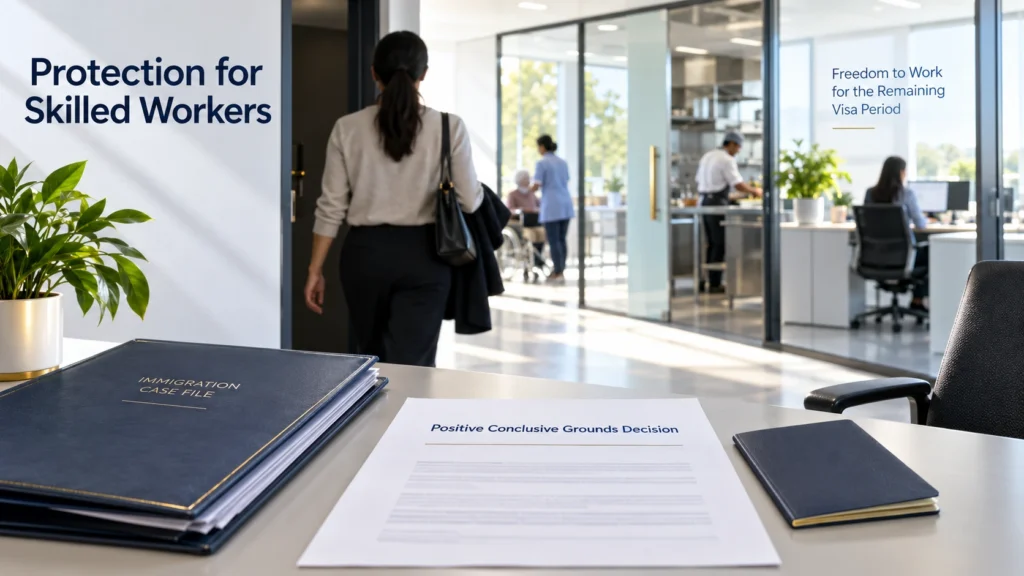
Under the new provisions, eligible workers can have their employment restrictions removed, allowing them to work for another employer without requiring new sponsorship.
These changes are particularly important for sponsored workers who may be experiencing exploitation but are concerned about the consequences of leaving their sponsoring employer.
What Is Considered Modern Slavery or Workplace Exploitation?
Modern slavery and serious workplace exploitation can involve employers or other individuals controlling, threatening or manipulating workers.
According to the Fair Work Agency’s official guidance, signs of serious workplace abuse may include:
- Threatening workers with violence or physical harm.
- Preventing employees from leaving their workplace or accommodation.
- Restricting workers from communicating with other people.
- Confiscating an employee’s passport.
- Preventing workers from accessing medical treatment.
- Forcing employees to live in accommodation provided by their employer.
- Requiring workers to remain in unsafe or unsuitable accommodation.
- Withholding wages or forcing employees to return their earnings.
- Forcing individuals to work to repay debts that continue to increase.
These circumstances may indicate serious exploitation or modern slavery and can be reported to the relevant authorities. Workers do not need to determine whether their experiences legally constitute modern slavery before raising their concerns.
How Can Skilled Workers Report Modern Slavery in the UK?
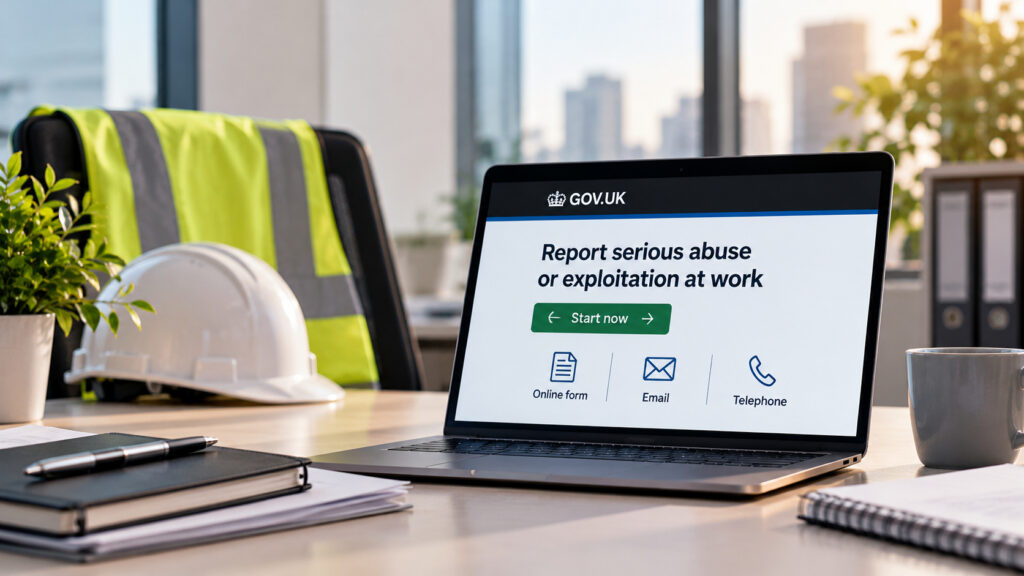
Skilled Workers who believe they are experiencing serious abuse or exploitation can contact the Fair Work Agency.
The agency accepts reports through its official online form, by email or by telephone.
1. Report Workplace Exploitation Online
Workers can submit their concerns using the Fair Work Agency’s official online reporting form. The form can be used to report suspected abuse or exploitation affecting the person submitting the report or another individual.
2. Report Modern Slavery by Email
Workers can also report their concerns by emailing [email protected].
The Fair Work Agency advises individuals to include the following information where possible:
- A description of the abuse or exploitation.
- The location where the incident is taking place or previously occurred.
- Relevant photographs or supporting documents.
- Contact details so the agency can request further information if necessary.
Providing relevant information can help the agency assess the report and determine what action may be appropriate.
3. Contact the Fair Work Agency by Telephone
Workers can contact the Fair Work Agency on 0800 432 0804. The telephone service operates Monday to Friday, from 9am to 5pm, excluding public holidays.
Calls are free, and individuals can leave a voicemail outside these hours. The agency can also arrange an interpreter where necessary.
Where someone is at immediate risk of harm or injury, they should call 999 and ask for the police.
What Happens After a Skilled Worker Reports Modern Slavery?
After receiving a report, the Fair Work Agency reviews the information provided to determine what action it can take. The agency may investigate the allegations or share the report with another organisation where appropriate.
The Fair Work Agency confirms that it will not disclose the reporting individual’s details to the person or organisation they have reported. Where an investigation identifies circumstances that may involve modern slavery, the agency may refer the individual to the National Referral Mechanism.
However, reporting exploitation does not automatically result in an NRM referral or recognition as a victim of modern slavery. The Fair Work Agency must first assess the circumstances and determine the appropriate action.
Can Skilled Workers Change Employers After Reporting Modern Slavery?
Reporting workplace exploitation does not automatically allow a Skilled Worker to change employers without sponsorship.
However, changes to the UK Immigration Rules introduced on 8 October 2026 allow eligible Skilled Workers who have been formally recognised as victims of modern slavery to work for another employer.
To qualify, the worker must have been referred to the National Referral Mechanism and received a positive Conclusive Grounds decision during their current period of Skilled Worker permission.
Once the relevant requirements are satisfied and their employment restrictions are removed, the worker can undertake employment with another employer, including self-employment, without requiring sponsorship from a new employer.
This permission applies for the remainder of their existing Skilled Worker visa. Employment as a professional sportsperson or sports coach remains prohibited.
Importantly, an allegation against an employer or the submission of a report to the Fair Work Agency does not, by itself, qualify a worker for these provisions.
What Are the Consequences for Employers Involved in Modern Slavery?
The Home Office has confirmed that it will take action against sponsors involved in the exploitation of migrant workers.
Under its sponsor compliance guidance, the Home Office may conduct compliance checks where there is reasonable suspicion that an employer has breached its sponsorship duties or is no longer suitable to hold a sponsor licence.
Depending on the findings, enforcement action may include suspension or revocation of the employer’s sponsor licence.
Where the Home Office believes that a criminal or civil offence has occurred, it may also refer the matter to the police or other relevant authorities.
However, allegations of modern slavery do not automatically establish that an employer has breached its sponsorship obligations.
The Home Office may assess the available evidence and conduct compliance checks before determining whether enforcement action is necessary.
What Should Employers Do to Prevent Workplace Exploitation?
Employers holding a UK sponsor licence must ensure that their recruitment and employment practices comply with UK employment law and Home Office sponsorship requirements.
Sponsors should regularly review their employment arrangements, salary payments and working conditions to identify potential compliance concerns. Employers should also establish appropriate procedures for responding to allegations of workplace exploitation and take concerns raised by sponsored workers seriously.
Failure to comply with sponsorship obligations can result in Home Office enforcement action and may affect an organisation’s ability to continue sponsoring overseas workers.
How Can Morgan Smith Immigration Help?
The changes introduced on 8 October 2026 have important implications for Skilled Workers who experience workplace exploitation and employers responsible for maintaining sponsor compliance.
Morgan Smith Immigration provides professional advice on UK Skilled Worker visa requirements, sponsor licence obligations and Home Office compliance matters.
With over 20 years of experience in UK immigration law, our team can assist employers in understanding their sponsorship responsibilities and addressing compliance concerns.
If you require advice regarding your immigration status, sponsorship obligations or concerns involving sponsored workers, contact Morgan Smith Immigration on 0203 959 3335 or email [email protected] for guidance.