

The latest Home Office statistics reveal a continued decline in UK visa applications across major immigration routes, including Skilled Worker, Health and Care Worker, Student and Family visas.
Published in November 2026, the figures cover the year ending (YE) October 2026 and highlight how recent immigration policy changes have coincided with a significant reduction in applications.
The statistics provide an indication of changing migration trends following tighter eligibility requirements, increased salary thresholds and restrictions affecting overseas recruitment.
Health and Care Worker Visa Applications Fall by 61%
The Health and Care Worker route has experienced one of the most substantial declines.
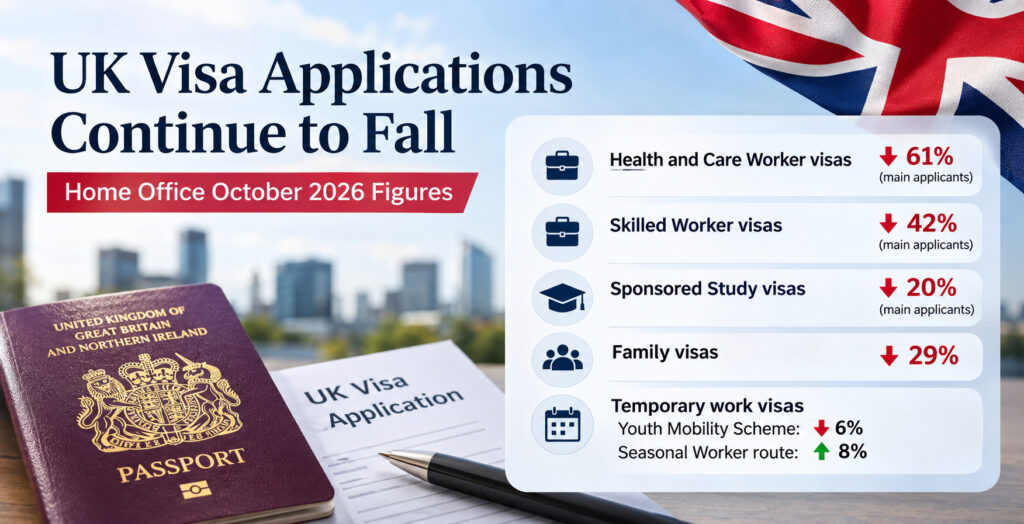
According to the Home Office, there were just 7,300 applications from main applicants in the year ending October 2026, representing a 61% decrease compared with the previous year.
Applications were also 95% lower than the peak of 161,700 recorded in the year ending November 2023.
Applications from dependants of Health and Care Workers also declined, falling by 36% to 30,000.
The Home Office attributes the longer-term decline partly to increased scrutiny of health and social care employers and compliance action against sponsors who failed to meet their obligations.
More recent reductions have followed immigration restrictions introduced in 2024 and July 2025, including the closure of overseas recruitment for care workers and senior care workers under the relevant visa route.
Skilled Worker Visa Applications Decline by 42%
The Skilled Worker route has also recorded a significant reduction in applications.
In the year ending October 2026:
- 25,300 applications were submitted by main applicants, a 42% annual decrease.
- 34,800 dependant applications were recorded, representing a 25% decline.
These figures follow substantial changes to the Skilled Worker route introduced on 22 July 2025.
The general salary threshold increased from £38,700 to £41,700, while the minimum skill requirement was raised to RQF Level 6, subject to specified exceptions.
Workers sponsored for occupations on the Temporary Shortage List also became subject to restrictions on bringing dependants.
Further changes followed in January 2026, when the English language requirement increased from B1 to B2 for certain work visa routes, including Skilled Worker visas.
Although policy changes are not the only factor influencing application numbers, the figures demonstrate a sustained reduction in demand for sponsored work visas.
Student Visa Applications Drop by 20%
The decline has extended to the UK’s international education sector.
The Home Office recorded 349,900 Sponsored Study visa applications from main applicants in the year ending October 2026, representing a 20% decrease compared with the previous year.
Applications from student dependants fell by 32% to 15,400.
More significantly, dependant applications were 89% lower than in the year ending December 2023, before restrictions on most international students bringing family members took effect in January 2024.
The figures suggest that the impact of these restrictions continues to be reflected in application trends.
Family Visa Applications Fall by 29%
Family visa applications have also declined considerably.
There were 58,500 Family visa applications in the year ending October 2026, compared with 82,900 in the previous year.
This represents a reduction of 29%.
According to the Home Office, monthly applications have fallen since September 2025, following the Government’s decision to pause new applications under the Refugee Family Reunion route.
Individuals seeking family reunification may still apply through alternative family immigration routes where they meet the relevant requirements.
Temporary Work Visas Show Mixed Trends
Unlike the major sponsored work routes, temporary work visa applications have followed different patterns.
The Youth Mobility Scheme recorded 20,700 applications, representing a 6% annual decrease.
Meanwhile, Seasonal Worker visa applications increased by 8% to 41,800.
Both routes experience seasonal fluctuations, with applications generally peaking during spring.
The increase in Seasonal Worker applications contrasts with the wider decline across other work visa categories.
What Do These Figures Mean for Employers and Applicants?
The latest statistics highlight the changing nature of the UK’s immigration system.
For employers, tighter sponsorship requirements, higher salary thresholds and increased compliance expectations may affect recruitment strategies, particularly for businesses that rely on international workers.
For prospective applicants, changes to eligibility criteria and dependant restrictions mean that understanding the requirements of the relevant immigration route is increasingly important.
However, the Home Office emphasises that immigration policy is only one of several factors influencing application trends.
It is also important to recognise that these figures represent visa applications rather than approvals or actual arrivals in the UK.
Conclusion
The October 2026 figures show that UK visa applications continue to decline across several major immigration routes, with particularly sharp reductions in Health and Care Worker and Skilled Worker applications.
While temporary work routes present a more varied picture, the overall statistics reflect a period of substantial change in UK immigration policy.
These figures remain provisional, with final statistics expected in the Home Office’s quarterly Immigration System Statistics publication.
At Morgan Smith Immigration, we continue to monitor developments in UK immigration policy and their implications for individuals and businesses.
If you require professional advice regarding a UK visa application, sponsorship requirements or immigration compliance, contact Morgan Smith Immigration on 0203 959 3335 or email [email protected] .
Follow Morgan Smith Immigration for the latest UK immigration news and updates.