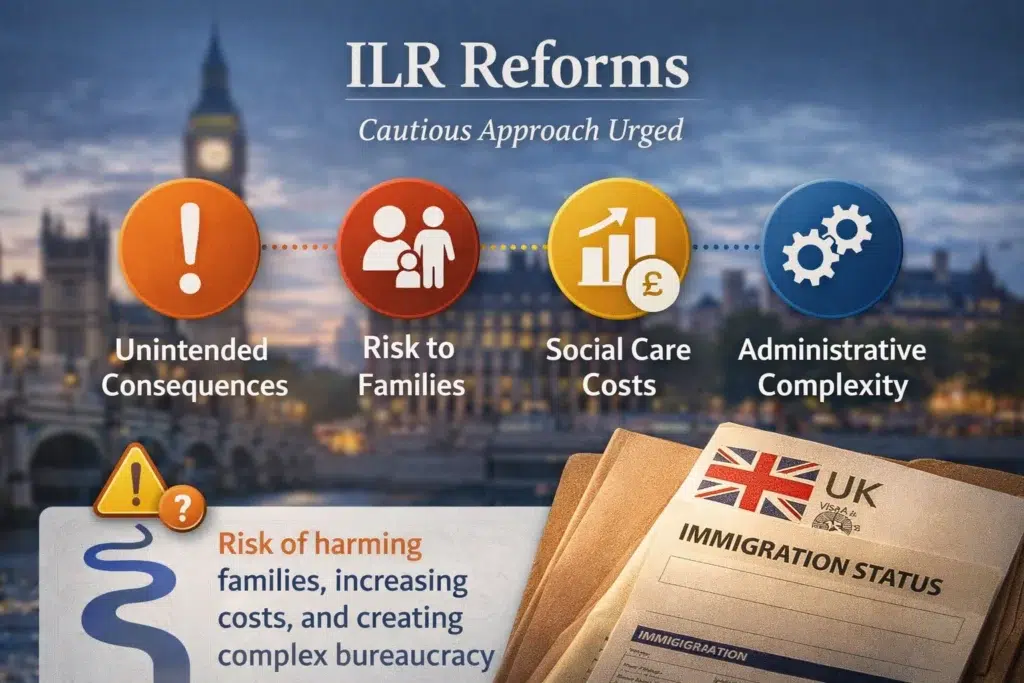



UK Government’s earned settlement proposals have created uncertainty for couples and families using the UK Spouse Visa. Many applicants are concerned that the usual route to Indefinite Leave to Remain could increase from five years to ten.
The position is more reassuring for partners of British citizens. Under the proposed model, they would receive a five-year reduction from the ten-year baseline. This would preserve a five-year pathway where the relevant family requirements are met.
However, spouse visa holders should not be confused with dependants on work routes. Adult dependants of Skilled Workers and other economic migrants could receive individual settlement periods. Their earnings and personal circumstances may also become relevant.
This article examines the current spouse visa rules, the £29,000 income requirement and the possible effect of earned settlement reforms on migrant dependants.
What is earned settlement?
Earned settlement is the Government’s proposed model for granting Indefinite Leave to Remain. It would place greater weight on an applicant’s conduct, integration and economic contribution.
The Government has proposed a ten-year settlement baseline for many migrants. An applicant’s qualifying period could then be reduced or increased according to specified criteria.
Proposed mandatory conditions include suitability requirements and no outstanding government debt. Applicants may also need English at B2 level and a pass in the Life in the UK Test.
The consultation proposed annual earnings above £12,570 for between three and five years. It also considered shorter routes for higher earners and certain public service workers. Community involvement could provide another possible reduction.
These measures are not current spouse visa rules. The consultation closed on 12 February 2026. The final requirements, implementation dates and transitional arrangements have not been confirmed.
Will British citizen’s spouses face a ten-year route?
Under the proposed model, qualifying partners, parents and children of British citizens would receive a five-year reduction from the ten-year baseline. This would preserve a five-year pathway where the relevant family requirements are met.
The consultation marks this reduction as not subject to consultation. However, it remains part of the proposed earned settlement model. It has not replaced the current Immigration Rules.
Settlement is not automatic. Applicants must meet the applicable relationship, residence, financial, English-language and suitability requirements.
Applicants who cannot meet the financial requirement may still qualify on certain family-life or human-rights grounds. If granted permission on this basis, they may be placed on a ten-year family route.
Does the £12,570 proposal apply to spouses of British citizens?
No £12,570 personal earnings condition currently applies to partners of British citizens under the family visa route.
The family route has a separate financial requirement. This is generally assessed using the couple’s permitted combined income and savings. The applicant is not required to earn £12,570 independently.
The proposed threshold may have greater consequences for adult dependants of economic migrants. This includes partners of Skilled Workers and Health and Care Workers. Their settlement periods could be assessed according to their own circumstances.
Applicants should therefore confirm their immigration category before assessing the proposals. A spouse on the family visa route is treated differently from a dependent partner on an economic work route.
The £29,000 spouse visa income requirement
Most new spouse and partner visa applicants must meet a minimum income requirement of £29,000 a year. This threshold has applied to relevant applications made on or after 11 April 2024.
The requirement may be met through permitted employment or self-employment income. Certain pension and non-employment income may also qualify. The available sources depend on the couple’s circumstances and where they live when applying.
Cash savings may cover an income shortfall. Sufficient savings can sometimes meet the requirement without employment income. Strict ownership, calculation and holding-period rules apply.
Applicants must provide the financial evidence specified by the Immigration Rules. This may include payslips, bank statements and an employer’s letter. Self-employed applicants usually need tax records, accounts and supporting business documents.
The relationship and financial requirements must be met separately. Unless an exception applies, evidence of a genuine relationship will not remedy inadequate financial evidence. Missing or inconsistent documents may result in refusal.
A different test applies where the sponsor receives certain disability or carer’s benefits. The £29,000 threshold does not apply in these cases. The couple must instead demonstrate adequate maintenance and accommodation without relying on additional public funds.
Transitional protection under the previous threshold
Some applicants remain covered by the previous £18,600 minimum income requirement.
To qualify, an applicant must generally have made their first application as a partner, fiancé, fiancée or proposed civil partner before 11 April 2024. That application must have resulted in permission on the five-year route.
The applicant must still hold permission on the relevant five-year route. They must also be applying to stay with the same partner for whom permission was last granted.
An additional amount may apply for relevant dependent children. The requirement is £3,800 for the first child and £2,400 for each additional child.
A child component is not required for a British or Irish child. It is also excluded for a child who is permanently settled or has qualifying pre-settled status.
The total requirement under these transitional arrangements is capped at £29,000. Applicants applying with a new partner must normally meet the current threshold. A person on the ten-year family route cannot benefit from these transitional provisions.
Other UK spouse visa requirements
The financial test is only one part of a spouse visa application.
The applicant and sponsor must be in a genuine and continuing relationship. They must intend to live together permanently in the UK.
Applicants must provide evidence of a recognised marriage, civil partnership or qualifying partner relationship. Relevant documents may include certificates, joint financial records and proof of shared accommodation.
Couples who live apart may need to show how they maintain their relationship. This may include evidence of regular communication, visits, financial support and shared responsibilities.
The applicant must have adequate accommodation in the UK. The property must not be overcrowded or breach public health regulations.
An English-language requirement normally applies. The usual level is A1 for an initial partner application and A2 for a later extension. B1 is generally required for settlement. Exemptions may apply.
Suitability requirements must also be met. Criminal convictions, deception and previous immigration breaches may affect the decision. Certain unpaid NHS charges or litigation costs may also provide grounds for refusal.
How could worker dependants be affected?
The earned settlement proposals could significantly change the position of adult dependants on economic routes.
Under the current system, a dependent partner can usually qualify for settlement when the main applicant receives settlement. The dependant is not normally required to meet separate contribution conditions.
The Government proposes assessing adult dependants according to their own attributes and circumstances. Their qualifying period could be shorter or longer than that of the main applicant.
A dependant would not have an independent route to settlement if the main applicant did not qualify. However, the two partners would not necessarily become eligible at the same time.
The consultation also recognises that children may be unable to meet adult conditions. These include earnings and National Insurance contribution requirements.
The Government is considering age-related arrangements for dependent children. These could allow some children to settle with their parents without meeting every mandatory condition. Further safeguards remain under consideration, and the final rules have not been confirmed.
Why early settlement planning matters
Immigration applications are decided under the rules in force on the application date. A family’s position can therefore change before a planned submission.
Partners of British citizens should review their five-year route and financial evidence. Worker households should consider the possible effect of individual settlement periods.
Applicants should not make decisions based only on proposed rules. However, they should understand the possible changes and prepare for different outcomes.
Conclusion
The spouse visa route and earned settlement proposals must be considered separately. Under the proposed model, qualifying partners of British citizens would retain a five-year pathway. They must still meet the relevant financial, relationship, residence, English-language and suitability requirements.
The proposed £12,570 personal earnings condition does not currently apply to spouses of British citizens. However, it could affect adult dependants of Skilled Workers and other economic migrants if introduced.
Applicants should confirm their immigration route before making long-term plans. They should also check the Immigration Rules in force when they apply. Careful preparation can reduce the risk of delays, refusals and unnecessary expense.
Follow Morgan Smith Immigration for updates on the UK spouse visa and other developments in family migration, earned settlement policy and Home Office guidance.
With more than 20 years of experience and a firm commitment to professional standards, Morgan Smith Immigration assists individuals and families with spouse visa applications, extensions and settlement matters. Our team also advises on financial, relationship and evidential requirements under the family visa route. To discuss your circumstances or obtain professional assistance, call us on 0203 959 3335 or email [email protected].