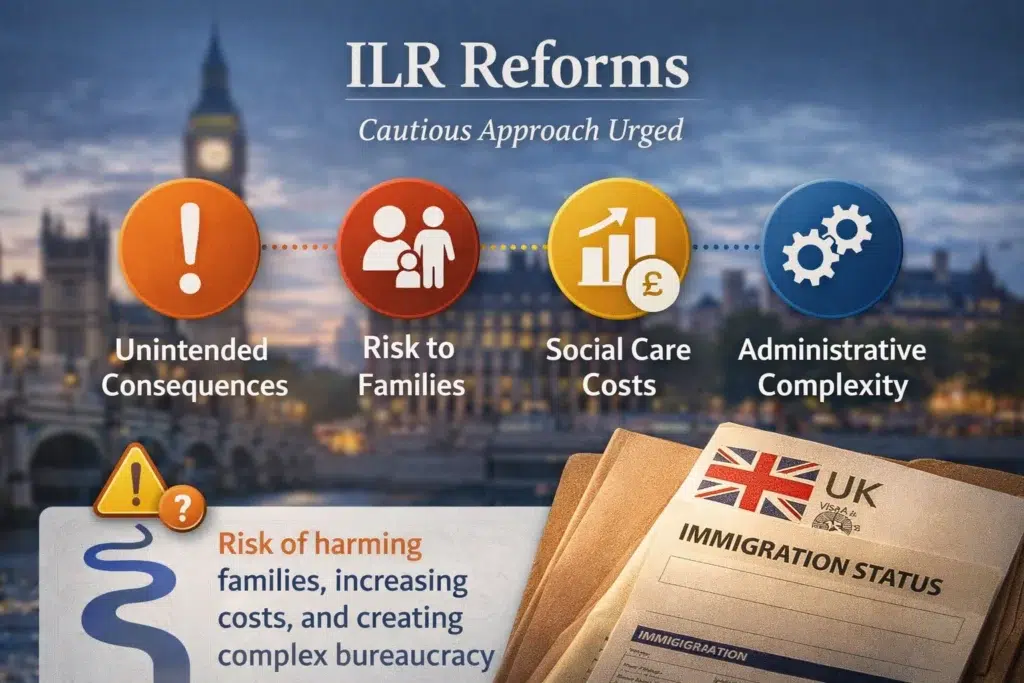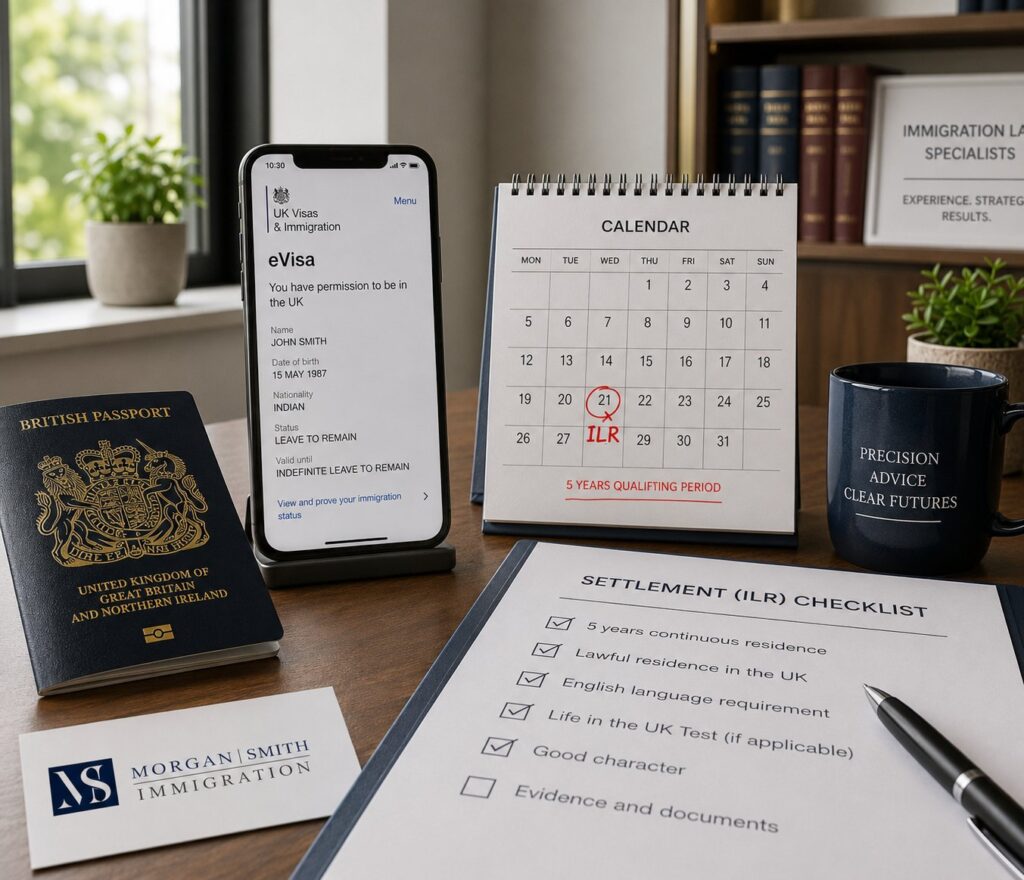



Earned settlement is the Government’s plan to change how people qualify for Indefinite Leave to Remain (ILR). Instead of settling after a fixed period, which is usually 5 years today, most migrants would start from a 10-year baseline that can be shortened by contribution or lengthened by things like claiming public funds.
The plan was announced in the May 2025 Immigration White Paper and set out in detail in the consultation A Fairer Pathway to Settlement, which ran from 20 November 2025 to 12 February 2026. Most of it is still a proposal, so this guide separates what is already law from what may change.
Where things stand: 2 October 2026
- The five-year routes to Indefinite Leave to Remain are still in force.
- The consultation closed on 12 February 2026. The Government has not yet published its response.
- On 15 September 2026 the Home Secretary told the Home Affairs Committee the policy would be set out later this year, including any transitional arrangements.
- The one change already made: from March 2027, most settlement applicants must show English at B2.
What Is the Earned Settlement Proposal?
The consultation sets out a settlement system built on contribution and integration. Every applicant would have to meet minimum mandatory requirements, and their qualifying period would then start from a baseline of 10 years, adjusted up or down depending on their circumstances.
A consequence of the proposed system is that there would no longer be a separate long residence route. Its purpose would be absorbed by the adjustable baseline. Settled status already granted would not be taken away, and the EU Settlement Scheme and Windrush Scheme are outside the reforms.
Proposed Qualifying Periods by Route
| Who | Qualifying period now | Under the proposals |
|---|---|---|
| Skilled Worker (RQF 6 and above), Minister of Religion, Scale-up, International Sportsperson | 5 years | 10-year baseline |
| Skilled Worker in a role below RQF 6, including many care roles | 5 years | 15 years (option consulted on) |
| Global Talent | 3 to 5 years | 10-year baseline, with a 7-year reduction after 3 years proposed |
| Innovator Founder | 3 years | 10-year baseline, with a 7-year reduction after 3 years proposed |
| UK Ancestry | 5 years | 10-year baseline |
| Hong Kong BN(O) | 5 years | 5 years (reduction not subject to consultation) |
| Partner, parent or child of a British citizen | 5 to 10 years | 5 years (reduction not subject to consultation) |
| Refugees on the new core protection route | 5 years | 20 years |
| Long residence | 10 years | Separate route removed |
| Victims of domestic abuse, bereaved partners | Immediate | Consultation asks whether reductions should apply |
| EU Settlement Scheme | Settled status | Out of scope |
How the 10-Year Baseline Could Be Reduced
| Proposed reduction | Effect on the 10-year baseline |
|---|---|
| Taxable income of £125,140 for the 3 years before applying | Minus 7 years |
| Taxable income of £50,270 for the 3 years before applying | Minus 5 years |
| 5 years in a specified public service occupation (health and education roles on national pay scales) | Minus 5 years |
| Community work, such as volunteering | Minus 3 to 5 years |
| 3 years’ continuous residence on Global Talent or Innovator Founder | Minus 7 years |
| English at C1 level | Minus 1 year |
Only the single largest reduction would apply. A Skilled Worker in a role below RQF 6 who starts from 15 years and earns £50,270 for three years would therefore still face 10 years, double today’s route.
Factors That Could Lengthen the Qualifying Period
- Receiving public funds for less than 12 months during the route: plus 5 years
- Receiving public funds for more than 12 months: plus 10 years
- Arriving in the UK illegally: plus up to 20 years
- Entering on a visit visa: plus up to 20 years
- Overstaying a permission by 6 months or more: plus up to 20 years
Only the largest increase would apply. Where both an increase and a reduction apply, they are combined: for example, claiming public funds for under 12 months (plus 5) with C1 English (minus 1) gives plus 4 years.
Mandatory Requirements Every Applicant Would Need to Meet
- Suitability: meet Part Suitability of the Immigration Rules, for example no criminal conviction, and have no current litigation, NHS, tax or other government debt.
- Integration: English at B2 and a pass in the Life in the UK Test.
- Contribution: annual earnings above £12,570 for at least 3 to 5 years (the exact period was consulted on), in line with the income tax and National Insurance thresholds.
The B2 English standard is already on its way. The Government changed the Immigration Rules on 5 March 2026 to require B2 for most settlement applications from March 2027, giving a full year’s notice. Read our guide to the ILR English requirement.
Settlement and Public Funds
The consultation also asked whether a No Recourse to Public Funds condition should be attached to settlement itself. If adopted, access to specified benefits would move from settlement to British citizenship.
What It Means for Dependants
Today, dependants of economic migrants usually settle at the same time as the main applicant. The consultation expects this to change: an adult dependant’s qualifying period would be decided by their own attributes and circumstances, so it could be shorter or longer than their partner’s. For children, the Home Office said it would develop an age-linked cut-off below which some mandatory requirements may be waived.
Partners and children of British citizens keep a 5-year route. See our guide to spouse visas and earned settlement.
The Transitional Arrangements Question
The biggest open question is who the changes would apply to. The consultation said: “we propose to apply these changes to everyone in the country today who has not already received indefinite leave to remain”, and asked for views on whether transitional arrangements should protect people already on a route.
No decision has been published. When the Home Secretary gave evidence to the Home Affairs Committee on 15 September 2026 she said transitional arrangements were still under consideration (our report), and at the end of September she signalled the final policy would balance fairness for people who came legally with fairness to British citizens (our report).
What This Means for Employers and Sponsor Licence Holders
- Longer sponsorship: if settlement moves from 5 to 10 or more years, workers stay on sponsored visas for longer, with more Certificates of Sponsorship, extensions and reporting duties.
- Retention risk: employees facing an uncertain or much longer route may reconsider their future in the UK.
- Salary and skill level: roles below RQF 6 could face 15 years, while earnings above £50,270 could cut the baseline to 5. Pay decisions now affect settlement timelines.
- Cost: more extensions mean more visa fees and Immigration Health Surcharge (IHS) payments. Use our Home Office sponsorship cost calculator to budget a longer route.
- Compliance over a longer window: salary errors, absences and late reporting have more time to arise, so ongoing sponsor compliance matters more.
What to Do Now
- Check your timeline: if you are close to qualifying under the current five-year rules, take regulated advice on applying before any change.
- Do not assume transitional protection: none has been confirmed.
- Prepare for B2 English: it is already law for most settlement applications from March 2027.
- Keep records: earnings, absences, employment changes and community work may all matter under the new model.
- Watch for the consultation response: it will set the final periods, any protections and the start dates.
Latest Earned Settlement Developments
- 20 November 2025: consultation published. Our analysis.
- 12 February 2026: consultation closed.
- 5 March 2026: Immigration Rules changed to require B2 English for settlement from March 2027. Read more.
- July 2026: reports that the Home Office may soften the reforms for existing migrants. Read more.
- 15 September 2026: Home Secretary tells MPs the policy will be set out later this year. Read more.
- September 2026: the TUC calls for the proposals to be withdrawn. Read more.
- Late September 2026: the Home Secretary signals possible changes after fairness concerns. Read more.
Earned Settlement: Frequently Asked Questions
What is earned settlement?
Earned settlement is the Government’s proposed model for Indefinite Leave to Remain. Instead of settling after a fixed period, usually 5 years, most people would start from a 10-year baseline that can be reduced for contribution, such as high earnings or public service, or increased for things like claiming public funds.
Is the 10-year ILR rule law yet?
No. As at 2 October 2026 the five-year routes remain in force. The consultation closed on 12 February 2026 and the Government has not yet published its response or laid the Immigration Rules needed to make the change.
Will earned settlement apply to people already in the UK?
The consultation proposed applying the changes to everyone who has not already received Indefinite Leave to Remain, and asked for views on transitional arrangements. No decision on transitional protection has been announced, so anyone part-way through a five-year route should plan for both outcomes.
Can high earners still settle after 5 years?
Under the proposals, earning a taxable income of £50,270 for the 3 years before applying would reduce the 10-year baseline by 5 years, and £125,140 would reduce it by 7 years. Only the single largest reduction would apply.
What English level is needed for settlement?
From March 2027 most settlement applicants must show English at B2, raised from B1. This change has already been made to the Immigration Rules, separately from the rest of the earned settlement proposals.
How does earned settlement affect sponsored workers and employers?
Workers would stay on sponsored visas for longer, with more extensions, fees and Immigration Health Surcharge (IHS) payments, and roles below RQF level 6 could face a 15-year baseline. Employers should review retention plans, salaries and sponsorship budgets now.
How Morgan Smith Immigration Can Help
We advise employers on how earned settlement could affect their sponsored workforce, and individuals on the best timing for their Indefinite Leave to Remain application. Read about the Skilled Worker visa or call us on 0203 959 3335.