


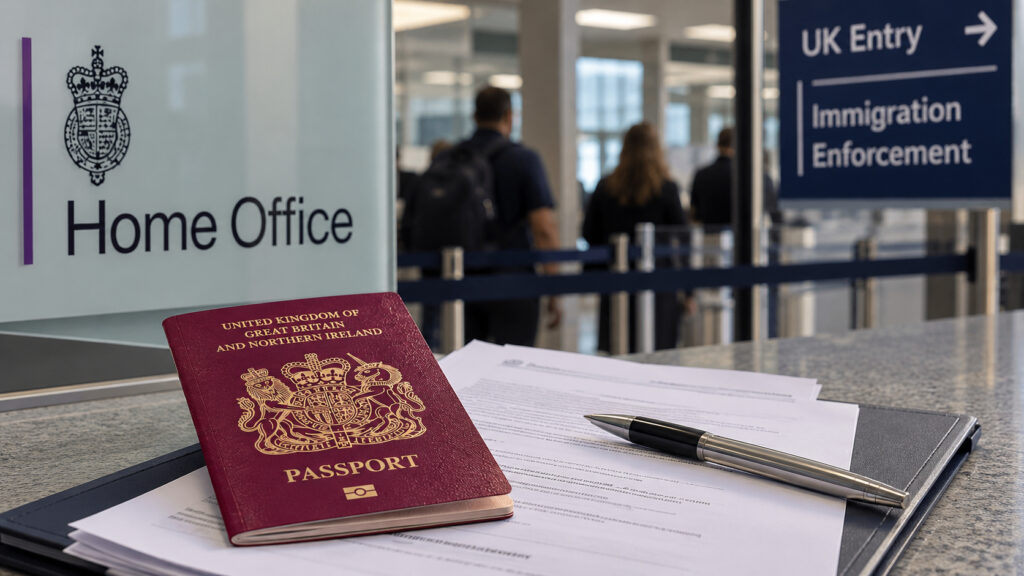
UK Home Office has published new guidance explaining how Foreign National Offender (FNO) conditional cautions operate in England and Wales.
Published on 18 September 2026, the guidance outlines when authorities may issue these cautions and the conditions attached to them. It also explains the consequences for foreign nationals who accept a caution but fail to comply.
Unlike ordinary conditional cautions, FNO conditional cautions can require individuals to leave the UK and prevent them from returning for a specified period.
What Is a Foreign National Offender Conditional Caution?
A Foreign National Offender conditional caution allows eligible foreign nationals to avoid prosecution for an offence, provided they accept and comply with specific conditions.
Section 22 of the Criminal Justice Act 2003 provides the legal framework for conditional cautions. Section 134 of the Legal Aid, Sentencing and Punishment of Offenders Act 2012 introduced provisions allowing their use to secure the removal of foreign national offenders.
The principal purpose of an FNO conditional caution is to secure an individual’s departure from the UK and prevent their return for a specified period. An FNO conditional caution is not a criminal conviction. However, accepting one requires an admission of the offence and agreement to the conditions imposed.
How Does an FNO Conditional Caution Differ from Prosecution?
Criminal prosecution involves bringing proceedings against an individual for an alleged offence. An FNO conditional caution provides an alternative where the relevant legal requirements are satisfied.
Under the Home Office guidance:
- Authorities must have sufficient evidence to charge the individual.
- The individual must admit committing the offence.
- An authorised person must explain the caution and its consequences.
- The individual must sign a document confirming their admission, consent and acceptance of the conditions.
If the individual complies with the conditions, prosecution for the original offence does not proceed. However, failure to comply without a reasonable excuse may result in criminal proceedings. Only individuals aged 18 or over can receive a conditional caution.
What Conditions Can Be Attached to an FNO Conditional Caution?
The Home Office guidance identifies two principal conditions that apply to FNO conditional cautions.
1. Requirement to Leave the UK
Individuals must leave the UK within a specified period. The normal departure period is 16 weeks from the date the caution is issued. In exceptional circumstances, authorities may allow a longer period, but it must not exceed 24 weeks.
2. Restrictions on Returning to the UK
Individuals who accept an FNO conditional caution cannot return to the UK for at least five years. In exceptional circumstances, the Crown Prosecution Service may extend this restriction to ten years. Where a deportation order is already in force, the individual cannot return unless that order is revoked.
Additional Conditions
Authorities may also require individuals to:
- Report regularly to an immigration office or police station.
- Obtain or assist in obtaining valid travel documents.
- Surrender their passport or identity documents.
- Provide their address and comply with lawful immigration instructions.
These additional requirements must support the principal purpose of securing departure from the UK.
Can an FNO Conditional Caution Affect Immigration Permission?
Yes. Accepting an FNO conditional caution can have serious consequences for an individual’s immigration status. The guidance states that cases involving individuals with limited immigration permission should be referred to Immigration Enforcement for cancellation of that permission.
UK Home Office should cancel the individual’s permission as soon as possible after they accept the caution and agree to leave. This means an individual may lose their existing immigration permission even though criminal prosecution does not proceed.
What Happens If Someone Breaches the Conditions?
Immigration Enforcement monitors compliance with FNO conditional cautions. If an individual fails to leave the UK within the specified period, authorities may restart prosecution for the original offence.
Individuals who return before their exclusion period expires may also face prosecution, subject to applicable statutory time limits. The police and Crown Prosecution Service determine whether non-compliance has occurred and whether prosecution should proceed.
Why Is Understanding an FNO Conditional Caution Important?
An FNO conditional caution may provide an alternative to prosecution, but accepting one carries significant immigration consequences. Individuals must understand the requirement to leave the UK, restrictions on returning and the possibility of losing their existing immigration permission.
With over 20 years of experience in UK immigration law, Morgan Smith Immigration provides specialist advice tailored to individual circumstances. If you need guidance or assistance with your UK immigration matter, contact our team on call us at 0203 959 3335 or email [email protected]. Follow Morgan Smith Immigration to stay updated on the latest UK immigration news, policy changes and legal developments.