

The UK Government’s recently announced earned settlement reforms have attracted strong criticism from migrant rights organisations, refugee charities and advocacy groups. Several organisations have warned that extending the qualifying period for Indefinite Leave to Remain (ILR) could leave migrants and their families facing years of uncertainty over their immigration status.
Following Home Secretary Shabana Mahmood’s announcement on 2 November 2026, concerns have emerged about the impact of longer settlement periods, income-based eligibility requirements and the proposed treatment of migrants already living in the UK.
Concerns Over Longer Settlement Routes
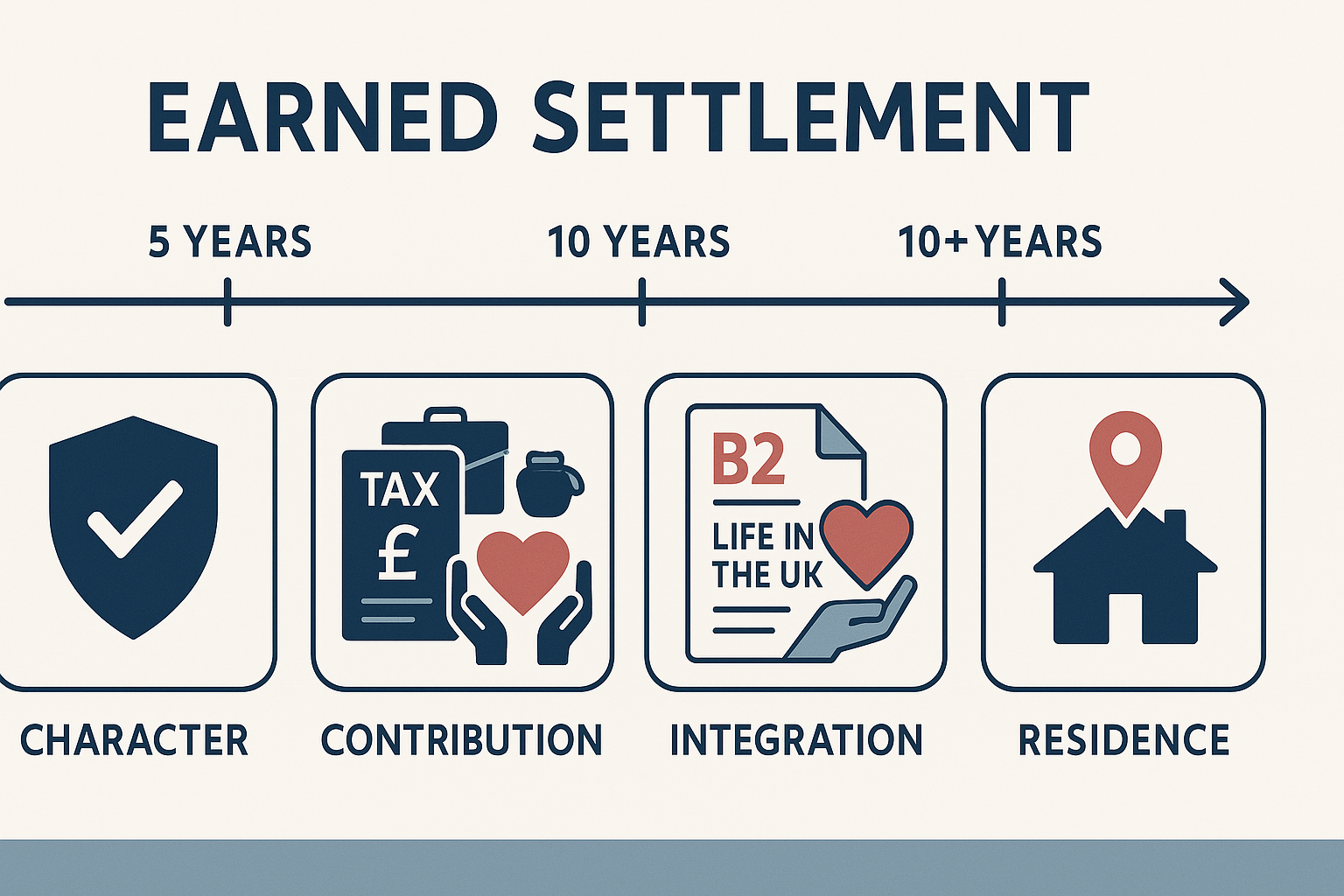
Under the Government’s earned settlement reforms, the standard qualifying period for ILR is set to increase from five to 10 years for most migrants.
However, shorter settlement routes will remain available to certain applicants, including higher earners and individuals working in specified public service professions.
Organisations including Migrant Voice, Praxis and Reunite Families UK have questioned whether the proposed system adequately considers the circumstances of migrants who have established careers, families and long-term commitments in Britain.
Migrant Voice has strongly criticised the reforms, particularly their potential application to existing migrants. The organisation argues that people who entered the UK under one set of settlement expectations could now face substantially longer qualifying periods.
It has also raised concerns about placing greater emphasis on earnings when determining eligibility for permanent residence.
Families Could Face Greater Uncertainty
Reunite Families UK has expressed concerns about the consequences for families affected by the proposed settlement requirements.
Although the organisation welcomed the Government’s decision to consider household income rather than individual earnings, it warned that families with unpaid caring responsibilities could still face disadvantages.
This could particularly affect households where one partner has reduced their working hours or stopped working to care for children or elderly relatives.
The organisation has also requested clarification on how the reforms will apply to partners of British citizens, particularly those currently holding visas outside the spouse route.
Questions remain about whether certain applicants will retain access to a five-year settlement pathway.
Refugee Charities Warn of Prolonged Insecurity
Refugee support organisations have raised particular concerns about proposals that could require some refugees to wait significantly longer before obtaining permanent settlement.
Women for Refugee Women has criticised proposals under which individuals arriving through irregular routes could face settlement periods of up to 30 years.
The charity argues that prolonged immigration uncertainty could disproportionately affect women who have experienced displacement, violence or persecution.
Similarly, the Helen Bamber Foundation has warned that extended settlement periods could have serious consequences for survivors of torture and trafficking.
The Foundation highlighted the importance of secure immigration status for individuals recovering from traumatic experiences. It also expressed concern that repeated immigration applications and prolonged uncertainty could affect refugees’ mental health and financial stability.
Welfare Restrictions Raise Further Concerns
The No Accommodation Network (NACCOM) has criticised the proposed relationship between welfare support and settlement eligibility.
According to the organisation, the reforms could prevent individuals who have received welfare assistance during the preceding five years from qualifying for settlement.
NACCOM warned that such restrictions could discourage eligible migrants from seeking essential financial or housing assistance.
The organisation also questioned whether longer settlement periods would make it more difficult for refugees and financially vulnerable migrants to secure stable accommodation and employment.
Could the Reforms Face Legal Challenges?
Beyond concerns about their social consequences, questions have emerged about the potential legal implications of applying revised settlement requirements to existing visa holders.
Skill Migrants Alliance has announced that it is seeking legal advice from Kingsley Napley regarding the possibility of challenging aspects of the reforms through judicial review.
The group is particularly concerned about whether applying the changes to migrants already in the UK would raise issues relating to fairness, legitimate expectations and legal certainty.
It is also examining whether transitional protections being considered for certain care workers could support arguments for similar arrangements for other Skilled Worker visa holders.
At present, no successful legal challenge has been established on these grounds.
What Happens Next?
For individuals and families affected by the earned settlement reforms, understanding how the changes may affect their eligibility for Indefinite Leave to Remain (ILR) and long-term immigration plans is increasingly important.
To help individuals assess their settlement timeline, Morgan Smith Immigration has developed an ILR Eligibility Calculator, which provides an initial estimate of when they may qualify for settlement based on their immigration circumstances.
Check your estimated ILR eligibility using our ILR Eligibility Calculator.
For professional advice on how the earned settlement reforms may affect your immigration status or settlement eligibility, contact Morgan Smith Immigration on 0203 959 3335 or email [email protected].