


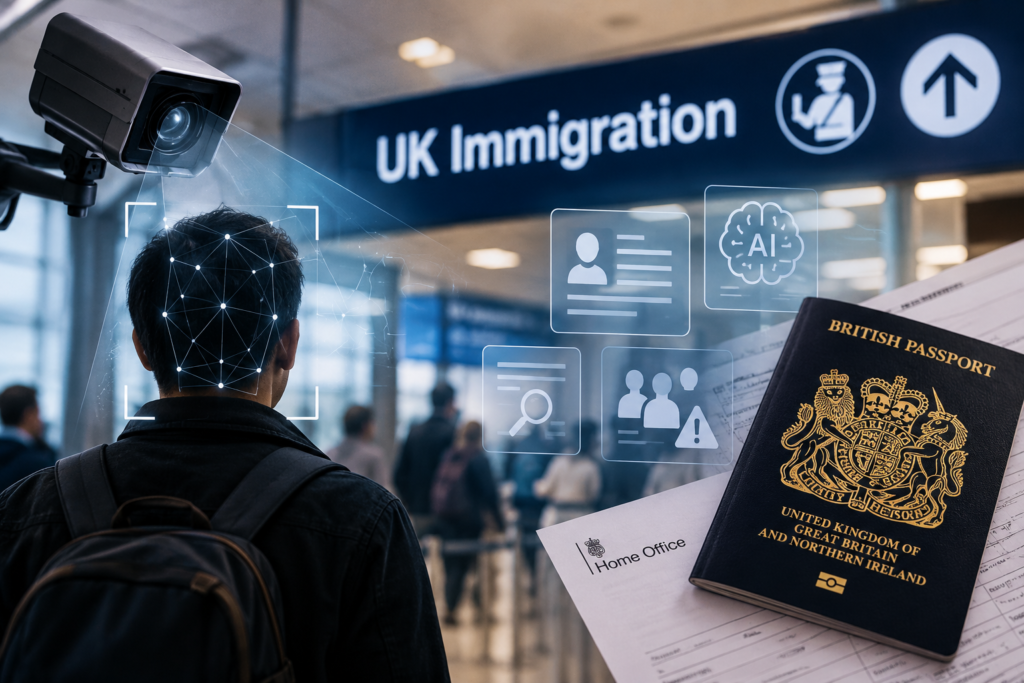
The increasing use of artificial intelligence (AI) in the UK’s immigration system has come under scrutiny following the publication of a new report by the Open Rights Group (ORG).
The report, Automated Discrimination: Unpacking the Digital Hostile Environment, examines how the Home Office is introducing AI into immigration processing, asylum procedures and border enforcement.
It raises concerns about discrimination, inaccurate information, limited transparency and the potential consequences for individuals whose immigration cases involve automated systems.
How Is the Home Office Using AI in Immigration Procedures?
The 105-page report identifies several areas where AI technologies are being used, developed or tested within the UK immigration system.
These include:
- Asylum age assessments: Using technology to estimate the age of individuals seeking asylum.
- Asylum interviews: Producing automated summaries of interviews and related information.
- Immigration casework: Assisting officials with reviewing immigration policies and prioritising asylum applications.
- Immigration enforcement: Examining mobile phone data for evidence of suspected immigration offences.
- Marriage investigations: Identifying marriages that may require further investigation over concerns about their authenticity.
- Border security: Using facial recognition and predictive technology to identify individuals considered potential enforcement priorities.
The report suggests that these developments represent a significant expansion of technology within immigration administration.
However, the extent to which individual systems influence final immigration decisions remains unclear.
Could AI Affect the Accuracy of Asylum Decisions?
One of the report’s principal concerns relates to the use of generative AI in asylum procedures.
Asylum applications frequently depend on detailed personal accounts, supporting evidence and the assessment of an individual’s circumstances.
According to ORG, automated systems used to summarise asylum interviews may omit relevant information, misinterpret statements or introduce details that were never provided.
Such inaccuracies could become particularly significant if officials rely on automated summaries when examining an asylum claim.
The report therefore raises questions about the reliability of AI-generated information and the importance of appropriate human oversight.
It does not establish that every AI-assisted asylum decision is inaccurate. Rather, it identifies risks that require careful examination.
Concerns Over Bias and Discrimination
ORG also questions whether automated immigration systems can produce fair outcomes when the information used to develop them contains existing social or institutional biases.
AI systems identify patterns within data. Where that data reflects historical inequalities or discriminatory practices, there is a risk that automated assessments could reproduce those patterns.
The report warns that this may have serious implications for migrants and asylum seekers, particularly where technology is used to assess risk or identify individuals for immigration enforcement.
These concerns are especially relevant when automated assessments influence decisions involving an individual’s immigration status, personal circumstances or potential removal from the UK.
ORG argues that greater scrutiny is necessary to establish whether these technologies operate fairly and consistently.
Facial Recognition and Predictive Technology at UK Borders
The report also examines the Home Office’s increasing interest in AI-supported border enforcement.
One example involves a trial of live facial recognition technology at the Port of Holyhead, intended to help identify individuals subject to deportation orders.
Another development highlighted is Project Cerberus, a Home Office initiative involving predictive analytics and risk assessment.
ORG raises concerns about how such technologies identify individuals, assess potential risks and determine which cases receive additional attention.
The organisation also questions whether automated risk assessments could contribute to discriminatory profiling.
However, the report identifies limitations in the publicly available information about these systems, making their effectiveness and safeguards difficult to assess independently.
Why Is Transparency a Major Concern?
A central finding of the report concerns the limited public information available about the Home Office’s use of AI.
ORG states that attempts to obtain details through Freedom of Information requests have frequently encountered restrictions, including exemptions relating to national security.
Consequently, important questions remain about how certain systems operate, what information they process and the safeguards applied to their use.
The report also highlights the involvement of private technology companies in developing and supplying systems used for immigration and border enforcement.
ORG argues that limited disclosure makes it difficult for the public to assess whether these technologies are effective, proportionate and consistent with fundamental rights.
Greater transparency would also help establish how automated assessments are reviewed and whether affected individuals have meaningful opportunities to challenge errors.
What Changes Does the Open Rights Group Recommend?
The report calls for a reconsideration of how artificial intelligence is introduced into immigration administration.
Its recommendations focus on five areas:
- Addressing underlying policy issues: Ensuring technology is not treated as a replacement for resolving broader problems within immigration policy.
- Stronger regulation: Introducing more effective safeguards for AI systems that may affect individuals’ rights.
- Greater accountability: Improving public access to information about automated systems and their operation.
- Reducing reliance on technology suppliers: Examining the Government’s dependence on major private technology companies.
- Reviewing the wider policy approach: Considering how immigration enforcement priorities influence the development and use of automated technologies.
These proposals are recommendations made by ORG, rather than changes that have been introduced into UK immigration law.
What Could This Mean for UK Visa Applicants and Asylum Seekers?
The report raises important questions about the increasing role of technology in immigration administration.
For applicants, concerns about automated summaries, inaccurate information and potentially biased assessments highlight the importance of reliable evidence and accurate case records.
For individuals seeking asylum, the accuracy of interview records and the proper consideration of personal circumstances can be particularly significant.
However, the publication of this report does not itself change existing visa requirements, asylum procedures or the legal grounds for challenging immigration decisions.
It remains important to distinguish between technologies currently in operation, systems undergoing trials and proposals for future implementation.
Final Thoughts
Artificial intelligence is becoming an increasingly prominent feature of UK immigration administration.
While technology may assist officials with administrative work, the Open Rights Group’s report questions whether sufficient safeguards exist to prevent errors, discrimination and inappropriate surveillance.
The findings underline the importance of transparency, accountability and proper scrutiny when technology is used in procedures affecting immigration status and individual rights.
With over 20 years of experience, Morgan Smith Immigration assists individuals with personal immigration matters and businesses with sponsor licence applications and compliance requirements.
For professional immigration advice, contact us on 0203 959 3335 or email [email protected].