

The UK Government’s new earned settlement framework has raised concerns among migrant families, particularly those who have moved to the UK together and are approaching eligibility for Indefinite Leave to Remain (ILR).
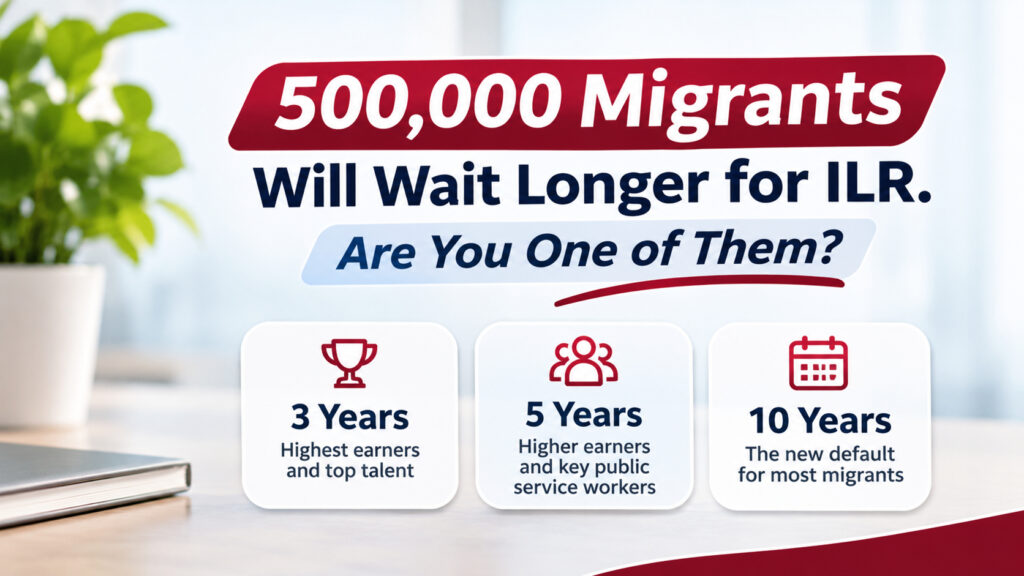
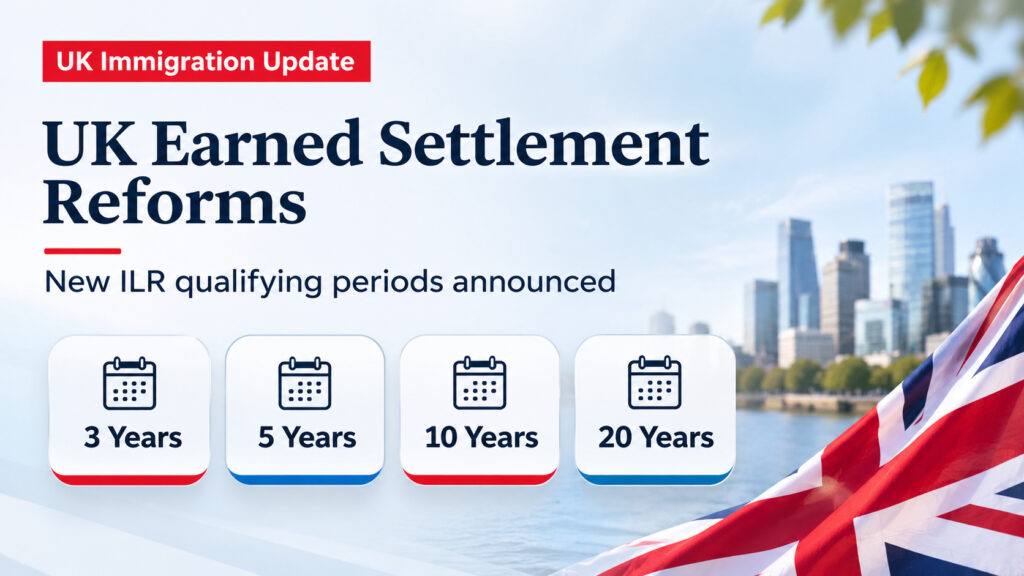
Following Home Secretary Shabana Mahmood’s announcement on 2 November 2026, the standard qualifying period for settlement is set to increase from five to ten years for most migrants, although shorter pathways will remain available for certain applicants.
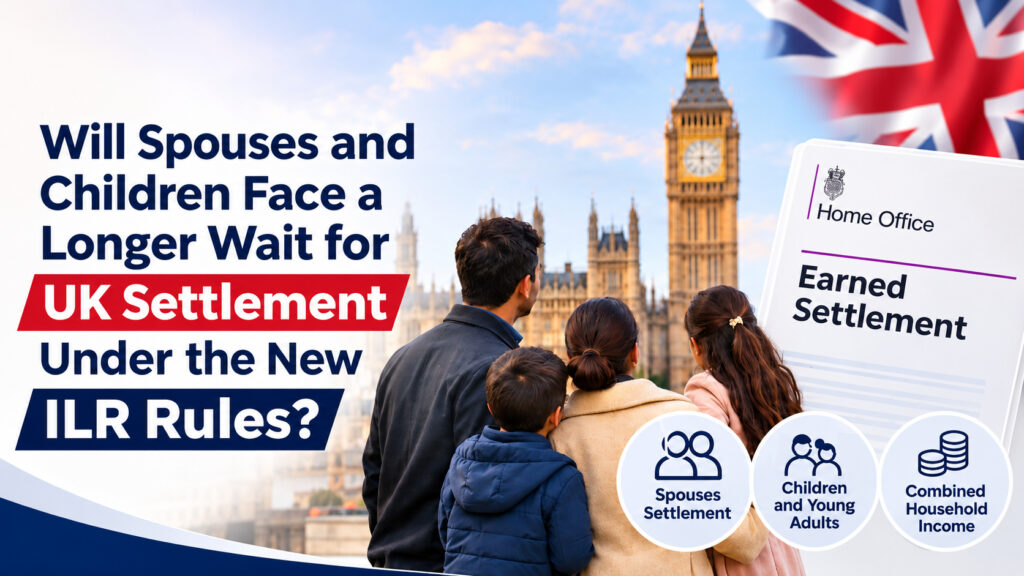
But what happens to spouses and children under these changes? Will families still be able to obtain settlement together and what happens if a child reaches adulthood before their parents qualify for ILR?
These questions were raised directly in the House of Commons, prompting clarification from the Home Secretary. A subsequent parliamentary response on 10 November 2026 provided further details about how children and young adults will be treated under the new framework.
What Did Shabana Mahmood Say About Family Settlement?
During the House of Commons debate on 2 November 2026, an MP raised concerns about families who had entered the UK under the existing five-year settlement pathway.
The MP questioned whether spouses would now face separate ten-year qualifying periods and whether children reaching adulthood before their parents obtained ILR could lose their eligibility to remain in the UK.
Responding to these concerns, Home Secretary Shabana Mahmood stated:
“Member has probably not yet had the opportunity to look at the chapter on dependants within the consultation response, so let me reassure her that we have confirmed that the position on children is largely unchanged. And as for spouses, they will normally settle at the same time as the main applicant if they arrived at the same time or they will do if they’ve arrived after the main applicant just the same time period. Looking at income we consulted specifically on this point we have also said that for those on lower incomes, or to reflect the fact that one partner might take time out for caring responsibilities, combined household income can be used rather than individual income.”
Her response addressed three important issues: settlement arrangements for children, the position of spouses who arrive alongside or after the principal applicant, and the consideration of combined household income.
The Home Secretary indicated that existing provisions concerning children would remain largely unchanged, while spouses would generally continue to be able to settle alongside the principal applicant, subject to the relevant requirements.
Source: House of Commons, Immigration: Earned Settlement debate, 2 November 2026.
Will Spouses Still Be Able to Settle Together?
Under the Government’s announced framework, spouses who arrive in the UK at the same time as the principal applicant will normally continue to be able to settle alongside them, provided they meet the relevant eligibility requirements.
Where a spouse arrives later, they would generally need to complete the applicable qualifying period from their own arrival.
The Government has also recognised that individual earnings do not always reflect a family’s overall financial circumstances.
During the parliamentary debate, Shabana Mahmood confirmed that combined household income could be considered rather than individual earnings, particularly where one partner earns less or has taken time away from employment for caring responsibilities.
However, further technical guidance is expected to clarify how these provisions will operate in practice.
What Happens to Children Under 18?
Further clarification was provided in a parliamentary written answer published on 10 November 2026.
A question was raised about families moving to the UK where one parent earns more than £50,270, the other earns less, and their combined household income is below £100,000.
The question specifically concerned children who arrive alongside their parents at the age of 14 or older and whether they would qualify for settlement after five or ten years.
Responding on behalf of the Home Office, Jo White MP confirmed that children under 18 would continue to be eligible for settlement when both parents had obtained settled status, except where one parent has sole responsibility.
Importantly, children under 18 will remain exempt from several mandatory requirements under the earned settlement framework, including:
- Income requirements.
- Government debt requirements.
- English language requirements.
- The Life in the UK Test.
However, they will remain subject to the relevant suitability and criminality requirements.
This means that children will not be expected to satisfy the same financial and integration requirements as adult applicants.
Source: [UK Parliament – Written Question 40105, answered 10 November 2026]
What If a Child Turns 18 Before Their Parents Obtain ILR?
One of the main concerns raised during the House of Commons debate was the position of children who reach adulthood while their parents are still waiting for settlement.
The Home Office has clarified that young adults aged 18 to 24 who retain their child-dependant status will continue to be able to settle alongside their families.
However, they will generally be expected to meet the mandatory requirements applicable to adults.
Unlike other adult applicants, they will not be required to meet the individual income or earnings requirement.
This distinction is particularly important for families whose children have grown up in the UK but may reach adulthood before their parents qualify for permanent residence.
Nevertheless, the ability to settle alongside their families will depend on retaining child-dependant status and satisfying the relevant requirements.
What About Children Who Have Lived in the UK for Seven Years?
The Government has also confirmed that children who have spent seven years or the majority of their lives in the UK will remain subject to the existing settlement arrangements.
This is particularly relevant to families whose children have spent a substantial part of their childhood in the UK.
However, seven years of residence does not automatically guarantee settlement. Applicants must continue to satisfy the requirements of the relevant immigration route.
Could Families Still Face a Longer Wait for Settlement?
Although the Government has confirmed protections for spouses and children, the wider earned settlement reforms could still extend the overall settlement journey for some families.
Where the principal applicant becomes subject to a longer qualifying period, family members who would normally settle alongside them may also have to wait longer.
The position may differ where spouses arrive at different times or where individual eligibility requirements have not been satisfied.
Therefore, while the Government has provided reassurance about family settlement arrangements, the precise impact will depend on each family’s immigration circumstances and the final Immigration Rules.
What Happens Next?
The Government has outlined its approach to spouses, children and young adult dependants, but further technical and operational details are still awaited.
UK Home Office has confirmed that additional guidance and impact assessments will be published ahead of implementation.
Further Immigration Rules changes are expected from December 2026, while clarification of transitional arrangements remains particularly important for families already living in the UK.
At Morgan Smith Immigration, we understand the uncertainty these proposed settlement changes may create for individuals and families planning their future in the UK.
If you are concerned about how the new earned settlement framework could affect your spouse, children or eligibility for Indefinite Leave to Remain, our immigration team can help you understand your current position and available options.
For professional immigration advice, contact Morgan Smith Immigration on 0203 959 3335 or email [email protected].