

UK Government has confirmed significant changes to the country’s Indefinite Leave to Remain (ILR) system, introducing new qualifying periods based on an individual’s earnings, employment history and contribution to British society.
On 2 November 2026, Home Secretary Shabana Mahmood outlined the Government’s final earned settlement policy in a statement to the House of Commons, following a public consultation that received more than 204,000 responses.
Under the reforms, the standard qualifying period for settlement will increase from five to 10 years for most migrants. However, shorter routes will remain available for higher earners, certain public service workers and individuals who meet specific eligibility criteria.
What Is the UK’s New Earned Settlement System?
The earned settlement framework introduces a different approach to obtaining permanent residence in the UK.
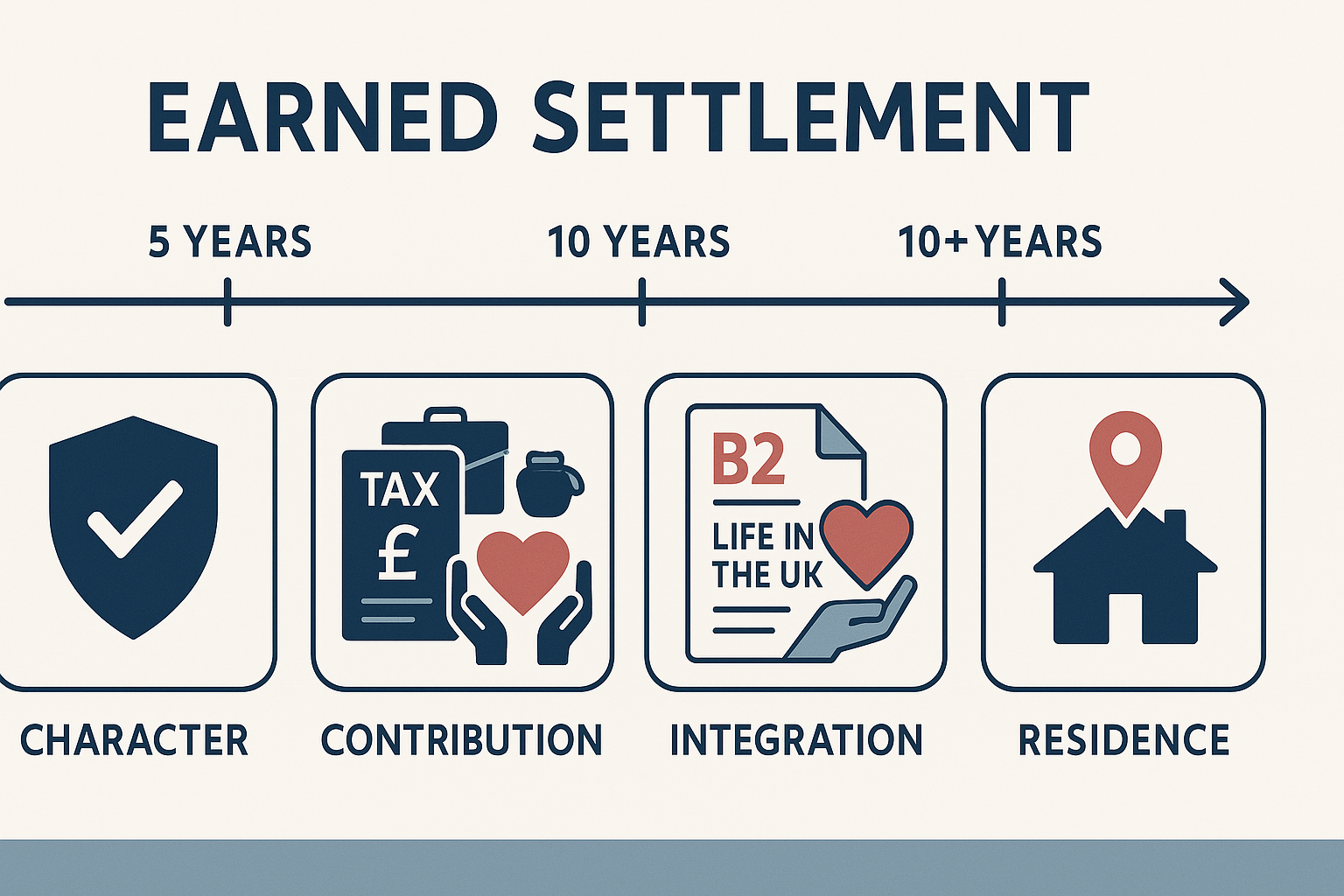
Rather than relying primarily on the length of time an individual has lived in the country, eligibility for settlement will increasingly depend on their economic contribution, compliance with immigration requirements and integration into British society.
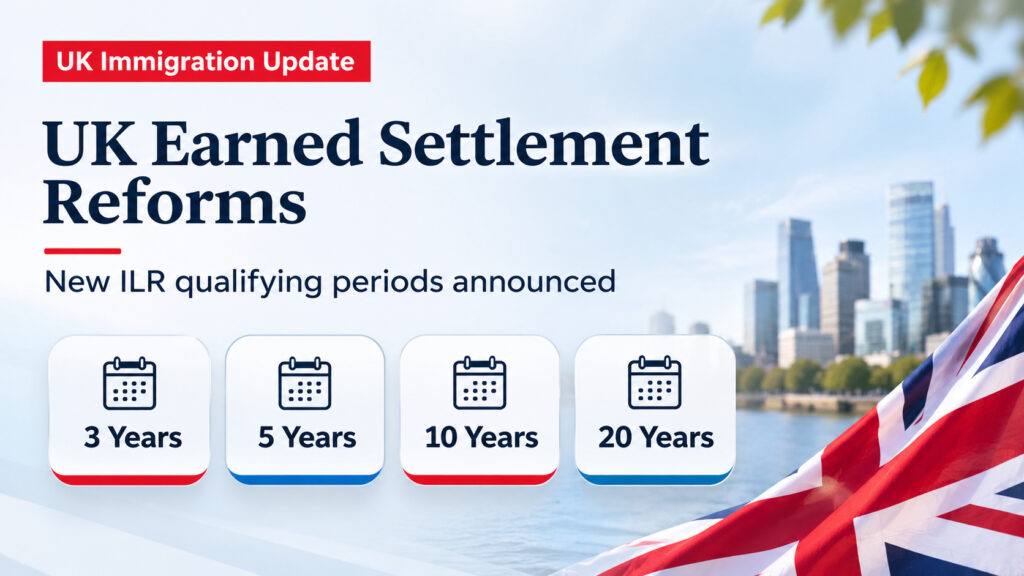
Under the new framework, settlement pathways will have qualifying periods of three, five, 10 or 20 years. The qualifying period will depend on an individual’s circumstances and whether they meet the relevant eligibility requirements.
New ILR Qualifying Periods: Who Can Apply and When?
Three-Year Settlement Route
A three-year qualifying period will be available to individuals considered to have made an exceptional economic contribution to the UK.
This includes:
- Individuals earning at least £125,141 annually for three years, or three of the previous four years.
- Individuals qualifying under the Government’s Highest Talent Group.
Applicants must also satisfy the applicable settlement requirements, including restrictions relating to immigration breaches and access to public funds.
Five-Year Settlement Route
The Government will retain a five-year settlement pathway for individuals making a substantial contribution to the UK.
Eligible applicants may include:
- Individuals earning at least £50,271 annually for three of the previous five years.
- Workers who have completed five years in qualifying public service occupations, including certain healthcare and education roles.
- Individuals with a qualifying British connection.
This means that eligible doctors, nurses, teachers and higher earners may continue to qualify for settlement after five years, provided they meet the relevant conditions.
Ten-Year Settlement Route
For most migrants, the standard qualifying period for ILR will increase from five to 10 years.
Under the announced framework, applicants on this pathway will generally need to demonstrate earnings of at least £12,571 annually for five of the previous seven years.
They must also meet the mandatory settlement requirements.
Individuals who require additional time before qualifying for settlement may be able to extend their temporary immigration permission, subject to the requirements of their visa route.
Twenty-Year Settlement Route
A longer qualifying period of 20 years will apply to certain individuals whose immigration history or use of public funds prevents them from accessing an earlier settlement pathway.
This includes circumstances involving qualifying immigration breaches or failure to satisfy the restrictions concerning public funds.
Applicants will still need to meet the relevant mandatory requirements before settlement can be granted.
Mandatory Requirements for Indefinite Leave to Remain
Alongside the revised qualifying periods, the Government has introduced baseline conditions that applicants will be expected to satisfy.
These include:
- Demonstrating a high standard of English language proficiency.
- Meeting the applicable criminality requirements.
- Having no outstanding debts to the UK taxpayer.
- Having made at least three years of National Insurance contributions.
The framework also introduces restrictions for applicants who have accessed public funds.
For the three, five and 10-year pathways, individuals must generally not have accessed public funds during the preceding five years.
These conditions mean that completing the required residence period alone will not necessarily establish eligibility for settlement.
Special Settlement Arrangements for Social Care Workers
One of the most significant announcements concerns overseas social care workers who are already living and working in the UK.
Following concerns raised during the consultation, the Government has confirmed transitional protections for certain workers who entered or switched into the care route before the publication of the Immigration White Paper in May 2025.
Five-Year Settlement for Eligible Care Workers
Social care workers who have complied with their visa conditions, including meeting the relevant £25,000 annual earnings requirement through employment in the sector, will be able to retain their existing five-year settlement pathway.
This arrangement recognises the contribution of workers who entered the UK to support the care sector during a period of significant staffing pressures.
Additional Opportunities for Other Care Workers
The Government has also announced provisions for certain care workers who have not fulfilled their original visa conditions.
Eligible individuals will be given an opportunity to apply for a further five-year care visa.
Under these arrangements:
- Workers will not be required to remain with their previous employer.
- The Government intends to support individuals in finding employment with legitimate care providers.
- Additional time will be provided to secure alternative employment before existing immigration permission is curtailed.
- Workers may become eligible to apply for settlement after completing the additional qualifying period and meeting the relevant requirements.
Similar transitional provisions will apply to certain public sector workers in healthcare and education, including auxiliary nurses.
Importantly, these arrangements are limited to individuals who joined the relevant routes before the Immigration White Paper was published in May 2025.
New Settlement Rules for Refugees
The earned settlement reforms also introduce substantial changes to the qualifying periods for refugees.
The Government has outlined different settlement pathways depending on how an individual entered the UK and whether they subsequently participate in employment, education or training.
Five-Year Route for Refugees Arriving Through Safe and Legal Routes
Refugees admitted through designated resettlement and sponsorship programmes, including the UK Resettlement Scheme, will remain eligible for settlement after five years, subject to the requirements of their route.
Ten-Year Route Through Employment or Education
Refugees granted protection in the UK who subsequently enter sustained employment, education or training may qualify for settlement through the Protection Work and Study pathway.
For those who have not entered the UK illegally, the qualifying period will be 10 years.
Additional requirements may include minimum earnings, English language proficiency and passing the Life in the UK test.
Twenty-Year and Thirty-Year Settlement Routes
Refugees who do not qualify through a designated safe and legal route or the Protection Work and Study pathway will generally face a 20-year qualifying period.
An additional 10-year period will apply to individuals who entered the UK illegally, potentially increasing the qualifying period to 30 years.
However, the Government’s framework provides an exception to the additional period where Article 31 of the Refugee Convention applies.
Refugees who entered illegally but subsequently meet the Protection Work and Study requirements may qualify after 20 years rather than 30 years, subject to the relevant conditions and exceptions.
These changes concern eligibility for permanent settlement and do not, by themselves, remove the UK’s obligations to provide protection to individuals who qualify for refugee status.
Will the New ILR Rules Affect Existing Visa Holders?
An important concern for migrants currently living in the UK is whether the revised settlement requirements will apply to them.
The Government has confirmed specific transitional protections for certain groups, particularly eligible social care workers and public sector employees who entered relevant routes before May 2025.
Certain other categories, including Hong Kong British National (Overseas) visa holders, members of the armed forces and individuals with qualifying British connections, will retain protected settlement arrangements.
However, the full implications for other existing visa holders will depend on the detailed Immigration Rules and transitional provisions introduced during implementation.
Individuals who are already progressing towards settlement should therefore avoid assuming that their existing qualifying period will automatically remain unchanged.
When Will the New ILR Rules Come Into Effect?
The Home Secretary confirmed that the Government intends to begin introducing the reforms through changes to the Immigration Rules in December 2026.
Implementation will then take place progressively throughout 2027.
Further information is expected, including detailed eligibility requirements, transitional arrangements and impact assessments.
Until the relevant Immigration Rules take effect, applicants must continue to follow the settlement requirements currently in force.
What Should UK Visa Holders Do Now?
The announced reforms could significantly affect long-term immigration planning, particularly for Skilled Workers, healthcare professionals, social care workers and individuals approaching eligibility for ILR.
Applicants should review their current immigration status, qualifying residence period, employment history and potential eligibility under the new framework.
Those approaching settlement eligibility may also wish to seek professional advice before making decisions about extending their visas or submitting settlement applications.
As the Government introduces further details, understanding the applicable rules and transitional protections will be particularly important.
How Morgan Smith Immigration Can Help
The UK’s earned settlement reforms represent a substantial change to the existing settlement system, with different qualifying periods and additional requirements depending on individual circumstances.
At Morgan Smith Immigration, we assist individuals and families with understanding their immigration options, assessing eligibility for Indefinite Leave to Remain and preparing settlement applications.
If you are concerned about how the announced changes may affect your route to permanent residence in the UK, our immigration professionals can provide advice based on your circumstances.
For professional immigration advice, contact Morgan Smith Immigration on 0203 959 3335 or email [email protected].
Stay informed about the latest UK immigration developments by following Morgan Smith Immigration.