


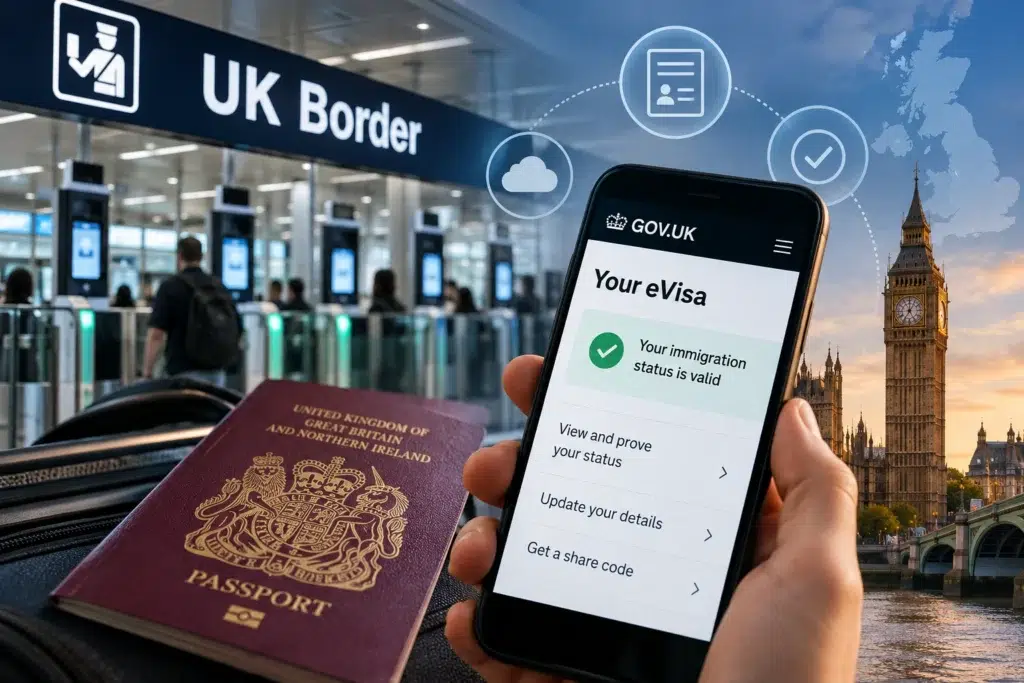
The UK’s move towards a fully digital immigration system has delivered significant progress. However, a new independent inspection makes clear that the transformation is far from complete.
The Independent Chief Inspector of Borders and Immigration (ICIBI) has published its inspection of the Home Office’s Future Border and Immigration System (FBIS). The programme was established to modernise the UK border and immigration system through greater use of digital technology.
The inspection, conducted between March and July 2026, examined eight benefits associated with FBIS. It recognised the implementation of eVisas and Electronic Travel Authorisations (ETAs) as significant achievements.
The move away from physical immigration documents has also reduced administrative work. At the same time, digital systems are becoming increasingly important for people proving their immigration status and travelling to the UK.
Digital Progress Must Be Matched by Reliable Records
The benefits of digitisation are clear. The Home Office says eVisas cannot be lost or stolen like physical documents. They are also intended to make proving immigration status quicker and easier.
However, removing physical documents also means greater reliance on the accuracy of digital records.
This matters where an individual’s UKVI account does not immediately reflect their current immigration position. Applicants may naturally rely on the information displayed through their eVisa. Where information is incomplete, delayed or incorrect, this can create practical difficulties when travelling, working or proving status.
We have previously examined some of these concerns in our article, “Does the UK eVisa System Work for Everyone?”
The wider issue is therefore not simply whether immigration records can be digitised. It is whether the systems and operational processes supporting those records can keep pace with the information people need.
The Digital Border Is Still a Work in Progress
The ICIBI found that delivering the wider digital border will continue beyond the planned closure of FBIS in March 2027.
Important challenges remain around infrastructure at ports and airports. Border Force must also adapt its working practices, roles and skills while facing wider workforce pressures. The Inspector warned that continued transformation requires clearer responsibility and sustained momentum.
The Home Office has accepted all three recommendations made by the ICIBI. It has committed to clearer ownership of programme benefits and further work on border transformation.
The report therefore presents a mixed but important picture. Digital immigration systems can deliver substantial efficiencies, but efficiency alone is not enough. As reliance on eVisas grows, accurate and timely digital records become increasingly important for the people expected to depend upon them.
Follow Morgan Smith Immigration for updates on UK immigration law, policy and official guidance affecting migrants, families and employers.
For advice on your UK immigration matter, contact Morgan Smith Immigration on 0203 959 3335 or email [email protected].