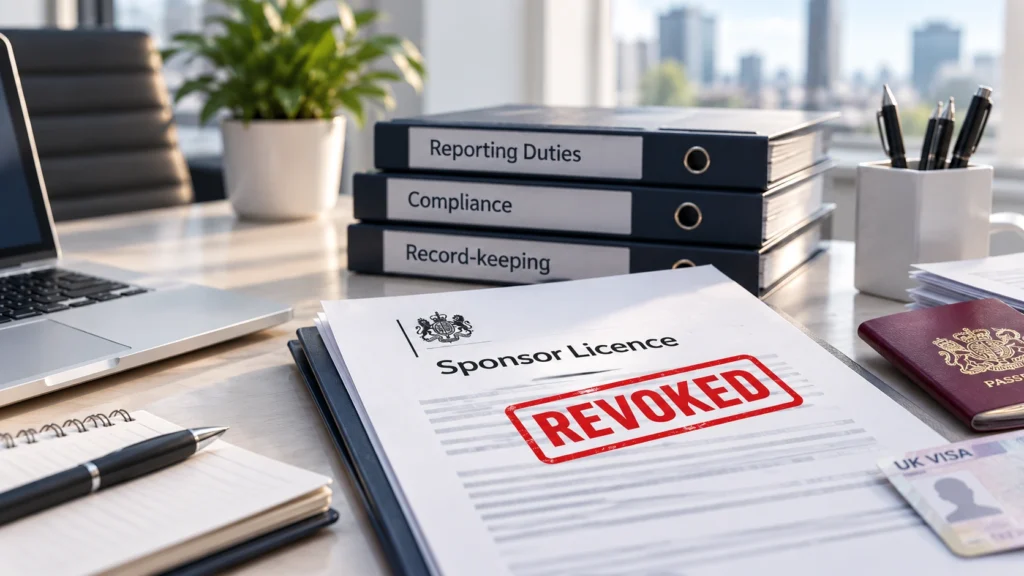


Could your organisation produce a complete Skilled Worker file at short notice? That is a practical test of sponsor licence compliance. If UK Visas and Immigration (UKVI) examines the licence, the records must demonstrate that each worker was recruited appropriately, has permission to work, performs the sponsored role and receives the correct salary. A mock sponsor compliance audit can identify gaps in these records before UKVI scrutiny and help your organisation strengthen its compliance systems.
Why record keeping matters
Record keeping is a continuing sponsor duty. UKVI may request documents, conduct a digital check or make an announced or unannounced visit. Officers may interview sponsored workers and recruitment staff, inspect HR systems and compare payroll information with HMRC data.
Non-compliance can lead to a reduced Certificate of Sponsorship allocation, downgrading, suspension or revocation of the licence.
What records should a Skilled Worker sponsor keep?
1. Right-to-work and immigration evidence
Retain evidence that a prescribed right-to-work check was completed before the worker started work. In most Skilled Worker cases, the sponsor will use the Home Office online right-to-work service with the worker’s share code. Where an online check is unavailable or another method is permitted, the sponsor may need to conduct a compliant manual document check or obtain confirmation through the Employer Checking Service.
The method used must comply with the current Home Office right-to-work guidance, and the required evidence must be retained. Where the worker has time-limited permission, determine whether and when a follow-up check is required. Where the sponsor supported an entry-clearance application, record the worker’s date of entry and retain the evidence required by Appendix D. Confirm that the worker entered during the period in which the visa was valid.
2. Recruitment and role evidence
The Skilled Worker route does not generally require a resident labour market test, but the sponsor must still show how the worker was recruited.
If the vacancy was advertised, keep the advert, details of where and for how long it appeared, applicant and shortlist numbers and at least one record explaining the selection method. This might be a summary of the successful candidate’s interview, common interview questions, selection reasons or a scoring record.
Appendix D does not generally require unsuccessful candidate’s CVs, application forms or interview notes where no formal test applies. If the role was not advertised, retain a dated explanation and available evidence showing how the worker was identified and assessed.
Keep a detailed job description that matches the occupation code, the Certificate of Sponsorship (CoS) and the work performed. Retain relevant qualifications, evidence of experience and any mandatory professional registration. If an advertised mandatory qualification was waived, record the reasons.
3. Contract, salary and payment records
Keep the contract of employment, contract for services or written statement of employment particulars. It should show the parties’ names and signatures, the start and end dates, the work to be undertaken, the working hours and the pay.
Retain payslips containing the required payroll details, together with separate evidence showing the amount and frequency of salary payments into the worker’s named bank account or permitted prepaid card. Payment records must identify the individual worker and allow the Home Office to compare the payments with the salary recorded on the CoS.
The contract, working hours, payslips and payment records should be consistent with the information recorded on the CoS. Retain evidence of the value of any relevant allowances, noting that allowances do not normally count towards the Skilled Worker salary threshold or applicable going rate unless a specified exception applies.
4. Contact, attendance and workplace records
Maintain an up-to-date history of the worker’s UK residential address, personal email address and telephone number. Systems should preserve previous details rather than replacing them.
Keep a record of the worker’s absences and retain evidence of their National Insurance number, unless exempt. Where applicable, retain the required DBS check, ATAS approval, professional registration or accreditation, and parental or legal-guardian consent for a sponsored worker under 18. Sponsors must also retain evidence that sponsored workers were given information about their employment rights in the UK.
Document the normal work location and any hybrid-working pattern. Hybrid working does not itself need to be reported, but changes to the main office or new client sites may be reportable. Entirely remote contractual working, with little or no attendance at the sponsor’s or a client’s premises, must be reported through the Sponsor Management System (SMS).
Record keeping and reporting must work together
An accurate file does not cure a missed SMS report. Changes affecting a sponsored worker must generally be reported within 10 working days; specified changes to the sponsor organisation must generally be reported within 20 working days. Reportable worker events include a failure to start within the permitted period, unauthorised absence exceeding 10 consecutive working days, certain unpaid or reduced-pay absences, a salary reduction, specified changes to the role or core duties, a change of normal work location and the end of sponsorship.
Before changing salary, hours, duties, job title, occupation code or work location, HR and the relevant licence user should assess whether the change is permitted, reportable or requires a new immigration application. Keep the assessment, approval and SMS submission confirmation with the worker’s record.
How long should records be retained?
Unless Appendix D states otherwise, worker documents must be kept throughout sponsorship and until the earlier of:
- One year after sponsorship ends; or
- The date a compliance officer examines and approves the records within that period.
Documents submitted with the sponsor licence application must be kept for as long as the organisation holds the licence.
Employment, tax, right-to-work, safeguarding or data-protection requirements may impose different retention periods.
Three preliminary checks
A useful preliminary review should confirm, at a minimum, that the following records are complete and consistent:
Right-to-work evidence: the prescribed check is dated, retained and confirms permission to undertake the sponsored role.
Role and salary alignment: the CoS, job description, contract, working hours, payslips and identifiable payment records agree.
Changes and reporting: contact details, absences, work locations and material employment changes are recorded and reported within the applicable deadlines.
These checks are only a starting point. To assess the complete worker file, supporting HR systems and Sponsor Management System history, book a mock sponsor compliance audit with our team. We will identify gaps and recommend proportionate corrective action before a Home Office compliance check.
Conclusion
Reliable and well-maintained records are fundamental to protecting a sponsor licence. Regular compliance reviews should confirm that each sponsored worker’s immigration status, recruitment history, duties, salary and attendance remain consistent with the information recorded on their Certificate of Sponsorship. Any reportable changes should be identified and addressed within the applicable Home Office deadlines.
Identifying and correcting deficiencies before UKVI scrutiny places an organisation in a stronger position to demonstrate effective sponsorship controls and compliance with its record-keeping and reporting duties.
Follow Morgan Smith Immigration for updates on sponsor licence compliance, the Skilled Worker route and developments in Home Office policy and guidance.
With more than 20 years of experience and a firm commitment to professional standards, Morgan Smith Immigration advises employers on sponsor licence applications, Skilled Worker sponsorship and ongoing compliance duties. Our team can also conduct a mock sponsor compliance audit to review sponsored-worker records, HR procedures and Sponsor Management System reporting practices.
To discuss your organisation’s sponsor licence requirements or arrange a mock compliance audit, call us on 0203 959 3335 or email [email protected].