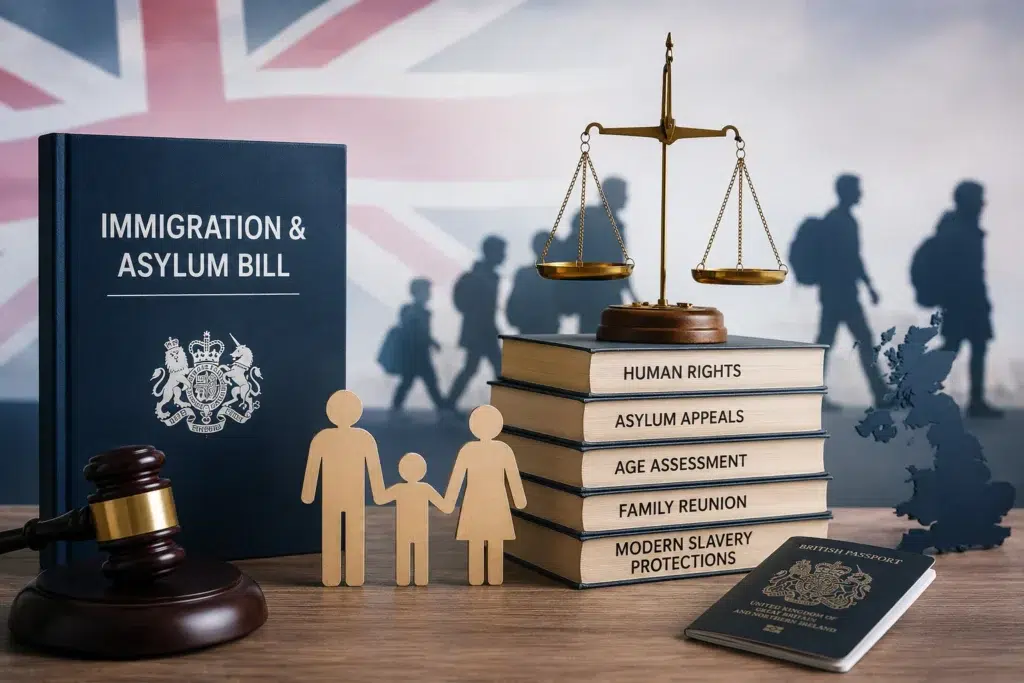


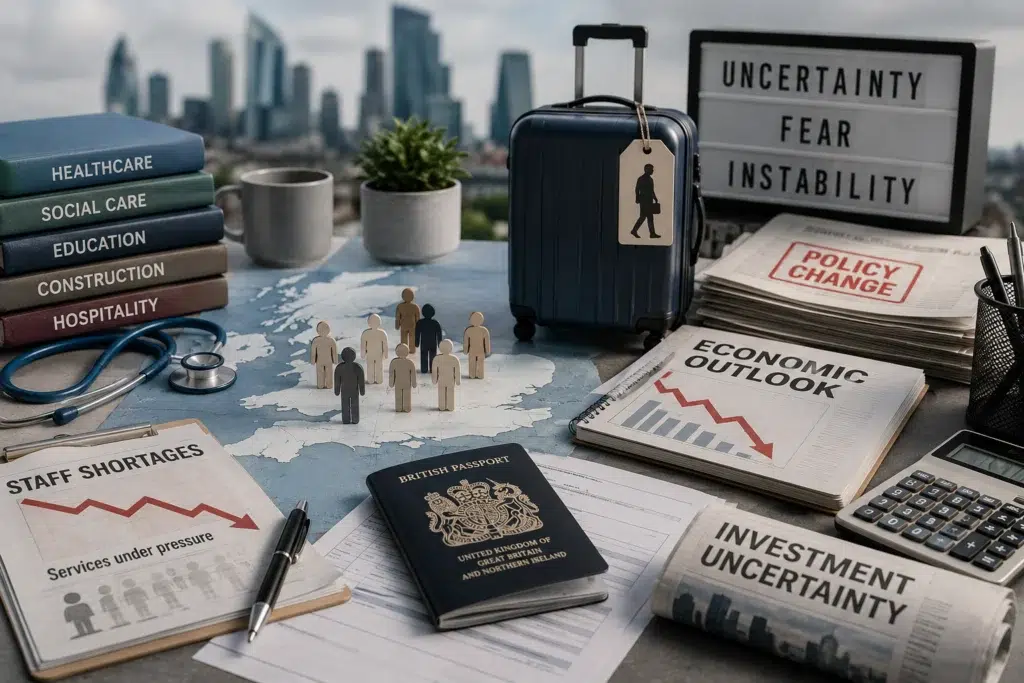
While political attention remains focused on global instability, rising energy costs and the possibility of a worldwide recession, another issue is quietly emerging as a major risk to the British economy: the prospect of a far tougher immigration regime under a future Reform UK government.
Immigration policy has become one of the most politically sensitive subjects in British politics. Yet much of the discussion is centred on headlines and rhetoric rather than the practical consequences for businesses, public services and investment.
The concern is no longer limited to reducing future migration numbers. A more serious question is beginning to surface what happens if large numbers of existing migrant workers, professionals and international investors no longer feel secure about remaining in Britain?
That scenario could have significant economic consequences.
The Risk Is Not Just Lower Migration, It Is Worker Departure
Reform UK has repeatedly called for stricter border controls, tougher nationality rules and large-scale deportation measures. Although the party has not yet published a complete immigration framework, statements from senior figures suggest policies that would go considerably further than those implemented in recent years.
A gradual fall in migration is one thing. A climate that encourages existing workers to leave is something entirely different.
Britain’s labour market remains heavily dependent on overseas workers across several key sectors, particularly healthcare, social care, hospitality, logistics and higher education. If political rhetoric creates uncertainty or fear among migrant communities, the country could face a serious loss of experienced staff in a relatively short period.
That risk should not be underestimated.
NHS and Social Care Could Face Severe Pressure
The NHS continues to rely heavily on overseas doctors, nurses and support staff. Social care providers are similarly dependent on international recruitment to fill persistent labour shortages.
Recent Home Office data already shows a decline in health and care visas following tighter immigration rules. A more aggressive approach under Reform UK could accelerate that trend significantly.
The danger is not simply that fewer workers arrive in future. The larger problem would be experienced professionals choosing to leave Britain altogether.
Such an outcome would place enormous pressure on public services. Longer NHS waiting lists would affect not only patient care but also the wider economy, as more people remain unable to work due to delayed treatment.
Labour shortages would likely intensify across multiple sectors, pushing operating costs higher for businesses and potentially contributing to inflationary pressure.
Universities and International Education May Also Suffer
Britain’s university sector could face similar disruption.
International students contribute billions of pounds annually to the UK economy while supporting thousands of jobs across cities heavily reliant on higher education. Many institutions have become financially dependent on overseas enrolment.
However, international families are highly sensitive to political messaging and perceptions of social hostility. If Britain begins to appear less welcoming, students may increasingly choose competitor destinations such as Canada, Australia or parts of Europe.
The impact would extend beyond universities themselves. Local economies that rely on student spending including housing, retail and hospitality would also feel the effects.
Investor Confidence Relies on Stability
Foreign investment decisions are shaped by more than corporation tax rates or trade agreements. International companies also assess political stability, workforce availability and the wider social environment before committing capital.
Executives based in countries such as India, Japan and the United States may become less willing to relocate senior staff to Britain if the country is perceived as politically unpredictable or socially hostile towards migrants.
Several British entrepreneurs and investors have already expressed concern privately about the long-term direction of political debate surrounding immigration.
For some, the issue is no longer purely economic. It is increasingly about whether Britain remains an attractive and stable place in which to live, invest and raise families.
London’s International Reputation Could Weaken
London has long benefited from its reputation as an open and globally connected financial centre. International wealth, business activity and tourism have all contributed to the city’s economic strength.
That reputation, however, depends heavily on perceptions of stability and openness.
If Britain develops an image of political hostility towards migrant communities or international professionals, London’s position as a global destination for investment could weaken over time.
Tourism may also be affected if overseas visitors begin to perceive the country as less welcoming than competing destinations.
Britain’s Existing Growth Problems Remain Unresolved
These concerns arrive at a difficult moment for the British economy.
Productivity growth has remained weak since the financial crisis, while business investment continues to lag behind several comparable economies. Economists have pointed to multiple contributing factors, including Brexit-related trade barriers, high industrial energy prices, planning restrictions and years of inconsistent policymaking.
The Labour government has repeatedly stated that “economic growth is the number one mission”. Achieving that objective, however, requires long-term confidence from businesses and investors.
Frequent policy shifts and political instability tend to discourage investment decisions, particularly when companies are uncertain about future labour supply or regulatory direction.
The Debate Should Focus on Economic Reality, Not Political Theatre
None of this suggests that immigration policy should remain unchanged. Governments are entitled to manage borders, address infrastructure pressures and maintain public confidence in the immigration system.
However, there is a substantial difference between controlled reform and policies that risk creating widespread fear or uncertainty among existing communities and workers.
Britain’s economic model has long relied on international talent, global investment and openness to trade. Sudden and confrontational policy changes could weaken precisely those strengths at a time when the country can least afford further economic instability.
Conclusion
Britain is already facing weak growth, labour shortages and fragile investor confidence. In that environment, an aggressive immigration crackdown could create economic disruption far beyond the political debate surrounding migration itself.
The issue is not simply about future arrivals. It is about whether skilled workers, investors, students and businesses continue to see Britain as a stable and welcoming place to build their future.
At a time when the government is attempting to restore long-term growth, that question may prove more important than many politicians are willing to admit.
Follow us to stay updated on changes to UK immigration law, policy developments and guidance affecting migrants, employers and families.
With over 20 years of experience and a commitment to excellence, Morgan Smith Immigration is your trusted partner for all your immigration needs. Contact us today to learn more about how we can assist you with UK visa applications. For enquiries or assistance, call us at 0203 959 3335 or email [email protected].