


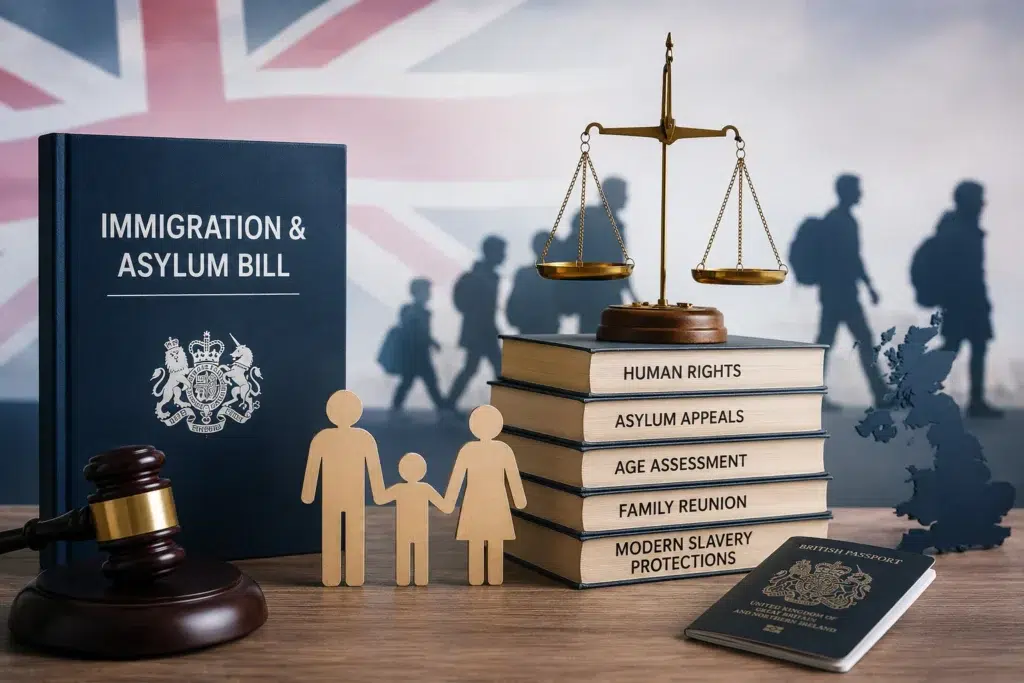
UK Government is expected to introduce a new Immigration and Asylum Bill to Parliament next week, bringing forward a series of significant reforms that could reshape the UK’s immigration and asylum system.
The proposed legislation is expected to introduce several changes to the UK’s asylum system. These include reforms to asylum appeals, removals, age assessments, human rights claims and modern slavery protections. Although Parliament has not yet debated the Bill, it has already prompted significant discussion among legal professionals, charities and parliamentarians.
Changes to Human Rights Claims
One of the most closely watched proposals concerns the application of Article 8 of the European Convention on Human Rights, which protects the right to respect for private and family life.
The Government is expected to introduce statutory guidance on how Article 8 should be applied in immigration and deportation cases. Ministers have argued that the current interpretation has, in some circumstances, delayed removals and reduced confidence in the immigration system.
Any changes in this area could have implications for individuals relying on family life arguments when challenging removal decisions.
Reform of Asylum Appeals
The Bill is also expected to reform the asylum appeals process.
Current reports indicate that an independent tribunal system may be replaced by a new appeals body operating within the Home Office. The Government has suggested this could create a more streamlined decision-making process.
The proposals are also expected to provide for the removal of individuals who have exhausted all available appeal rights without further delay.
These changes are likely to attract considerable parliamentary scrutiny, particularly in relation to judicial independence and access to justice.
Stronger Age Assessment Measures
The Government also intends to strengthen age assessment procedures for individuals claiming to be children.
Accurately determining age remains an important aspect of the asylum process, particularly where an applicant has no reliable documentation. However, organisations representing children and refugees have raised concerns that stricter assessment methods could increase the risk of genuine children being incorrectly treated as adults.
Reports have also suggested that new technology may play a greater role in future assessments, although details remain limited.
Modern Slavery Claims
The Bill is expected to amend aspects of the UK’s modern slavery framework.
According to reports, the proposed reforms aim to prevent late-stage modern slavery claims from delaying immigration enforcement action. The Government maintains that the changes are intended to reduce abuse of the system while continuing to support genuine victims.
Charities have, however, expressed concern that vulnerable individuals may face greater difficulty accessing protection if claims are made after immigration proceedings have begun.
Family Reunion Concerns
Several refugee organisations have also raised concerns regarding the potential impact of the Bill on family reunion.
The final provisions have not yet been confirmed. However, charities have warned about possible changes to family life considerations. These changes could affect some refugees and separated families seeking to reunite in the UK.
Campaign groups have urged the Government to protect children and vulnerable families. Many have been displaced by conflict or persecution.
Indefinite Leave to Remain Reforms Not Included
Recent discussion has also focused on proposals to increase the qualifying period for Indefinite Leave to Remain (ILR) from five years to ten years for many migrants.
However, current reports indicate that these changes will not form part of the Immigration and Asylum Bill itself.
Instead, the Government may seek to introduce any ILR reforms separately through secondary legislation at a later stage. Those proposals have already prompted political debate, particularly regarding whether they should apply to individuals already living lawfully in the UK.
Parliamentary Debate Expected
The Bill is expected to receive detailed examination when it is introduced to Parliament. Several of the proposed measures are likely to face opposition during the legislative process, particularly those concerning asylum appeals, age assessments, family life protections and modern slavery.
As with any Bill, the proposals may be amended before becoming law, and further guidance is expected if the legislation progresses.
How Morgan Smith Immigration Can Help
Immigration law continues to evolve and proposed legislative changes can have significant implications for individuals, families and employers.
If you are concerned about how future reforms may affect your immigration status or are seeking advice on UK Visa applications, professional legal guidance can help you understand your options.
At Morgan Smith Immigration, we continue to monitor developments closely and will provide updates as further details become available.
Follow us to stay updated on changes to UK immigration law, policy developments and guidance affecting migrants, employers and families.
With over 20 years of experience and a commitment to excellence, Morgan Smith Immigration is your trusted partner for all your immigration needs. Contact us today to learn more about how we can assist you with UK visa applications. For enquiries or assistance, call us at 0203 959 3335 or email [email protected].