

The financial impact of a UK student visa refusal is becoming an increasingly important issue for international students, universities and education advisers. While public debate often focuses on migration figures and university compliance, less attention is given to the amount applicants lose when their visa application is refused.
For many students, a refusal does not simply mean a delayed academic journey. It can mean losing hundreds of pounds in visa fees, additional money spent on documentation, travel arrangements, university deposits and, in some cases, the opportunity to begin studies in the intended intake.
Recent analysis of UK student visa refusal trends indicates that refused applicants generated more than £9.3 million in non-refundable visa application fees during the 12 months leading to Q1 2026. This figure highlights the growing financial risk attached to studying in the UK, particularly at a time when student visa applications have reportedly declined while the cost of applying has continued to increase.
Why UK Student Visa Refusals Carry a Financial Cost
UK student visa application fee is generally non-refundable, even where the application is unsuccessful. The Home Office position is that the fee covers the cost of processing the application, regardless of whether the outcome is positive or negative.
For students, however, the practical result is clear: a refusal can lead to a significant financial loss before they have even entered the UK.
Visa Fee Increases Add Pressure on Applicants
The cost of applying for a UK student visa has risen sharply in recent years. As application fees increase, the financial consequences of refusal become more severe.
A higher visa fee means that unsuccessful applicants lose more money at the point of refusal. For students from countries where exchange rates are unfavourable, this can represent a major financial setback.
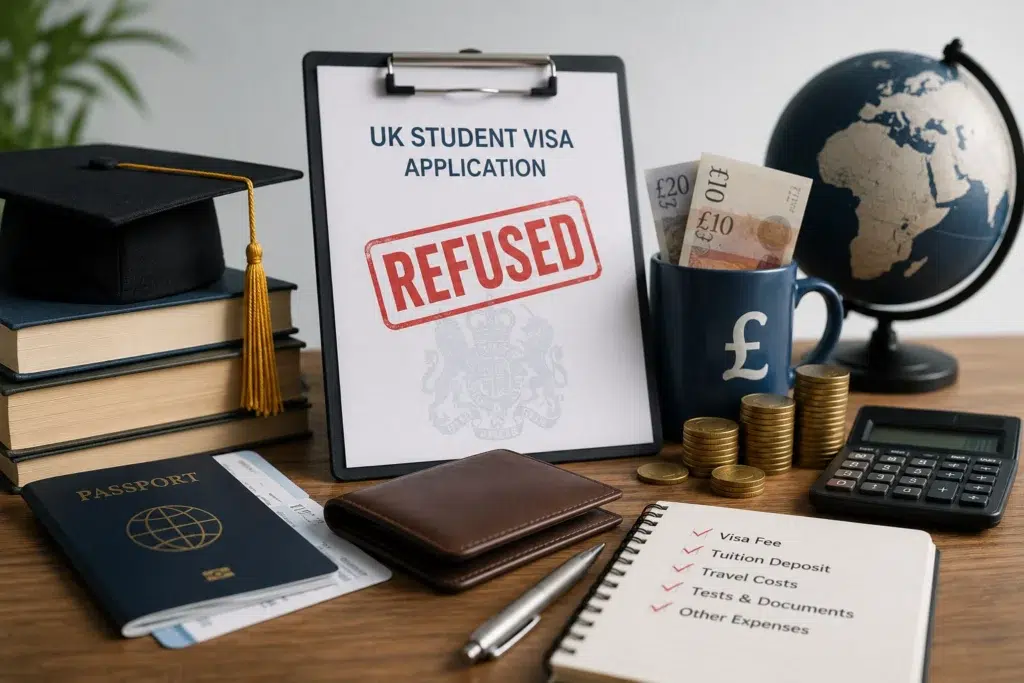
The issue is not limited to the visa fee itself. Students may also lose money on:
- tuition fee deposits;
- English language tests;
- document translation;
- TB testing, where required;
- travel and accommodation planning;
- professional advice or agency support;
This means the true cost of a UK student visa rejection is often much higher than the application fee alone.
Refusal Rates Are Not Equal Across Source Countries
UK student visa refusal rates vary significantly by nationality. Some major student markets experience very low refusal levels, while others face much higher rates.
Recent figures indicate that countries such as Pakistan, Nigeria and Bangladesh have seen comparatively high refusal rates, while applicants from countries such as China and the United States continue to experience very low rejection levels.
This difference matters because it affects how risk is distributed across the international student recruitment market. A student applying from a high-refusal country may face a very different level of financial exposure compared with an applicant from a market where refusals are rare.
For universities, these variations also create a compliance challenge. Institutions must balance international recruitment targets with the need to maintain strong visa approval rates. Where refusal rates rise sharply in a particular market, universities may become more cautious about issuing CAS letters.
Pakistan and Nigeria Under Greater Scrutiny
Pakistan and Nigeria remain important international student markets for the UK, but both have faced increased attention due to higher refusal rates.
Where refusal levels are high, students from these countries may face additional scrutiny around financial evidence, credibility interviews, source of funds and post-study intentions. Even where applicants are genuine, weaknesses in documentation or inconsistent answers during the visa process can lead to refusal.
This does not mean students from these markets should avoid applying. It does mean that applications must be prepared with greater care. A strong university offer is not enough on its own. The visa file must be complete, consistent and capable of addressing the specific concerns UKVI may raise.
Why CAS Approval Does Not Guarantee a Visa
A common misunderstanding among students is that receiving a CAS means the visa will automatically be granted. In reality, the CAS is only one part of the application.
UKVI can still refuse a Student visa if the applicant fails to meet the Immigration Rules or if the caseworker is not satisfied that the applicant is a genuine student.
A refusal can therefore arise even where the student has a genuine intention to study in the UK.
What Students Can Do to Reduce the Risk of Refusal
Students cannot control every aspect of the visa decision-making process, but they can reduce risk by preparing thoroughly.
Before applying for a UK Student visa, applicants should:
- check the latest Student visa requirements;
- ensure financial documents meet UKVI rules;
- confirm that funds have been held for the required period;
- seek professional guidance where the case is complex.
For applicants from countries with higher refusal rates, careful preparation is especially important. UKVI may examine financial evidence, study intentions and credibility in greater detail.
The Wider Impact on UK Higher Education
Student visa refusals affect more than individual applicants. They also have implications for universities, which rely heavily on international student enrolment.
Recent data indicates that UK Student visa issuances in Q1 2026 were approximately 32% lower than during the same period in 2025. At a time when international recruitment is already under pressure, continued visa refusals may create additional uncertainty for both students and institutions.
For universities, visa refusals can result in lower enrolment numbers and difficulties in forecasting student intake. For students, however, the consequences are often more immediate, including lost visa fees, potential tuition deposit losses and disruption to academic plans.
This highlights the importance of ensuring that applications are prepared thoroughly before submission, particularly where significant financial commitments have already been made.
A Growing Question of Fairness
The non-refundable nature of UK visa fees is not new. However, the issue becomes more significant as application fees rise and refusal rates increase in certain markets.
For students, the financial risk is becoming harder to ignore. A refused application may mean losing visa fees, deposits and months of planning. For families funding education from overseas, the loss can be substantial.
UK has a legitimate interest in maintaining immigration control and ensuring that Student visa applicants meet the rules. However, transparency and consistency in decision-making are essential. Students who are accepted by licensed universities should have clear information about the risks before committing large sums of money.
The Importance of Seeking Professional Legal Advice
For many international students, a visa refusal represents far more than an administrative setback. It can result in lost application fees, forfeited tuition deposits, delayed academic progression and uncertainty about future study plans.
While some refusals stem from straightforward documentary errors, others involve more complex issues relating to financial evidence, academic progression, credibility assessments or compliance with the Immigration Rules. In such cases, understanding the precise reason for refusal is essential before considering the next steps.
Seeking specialist immigration advice before submitting a Student visa application can help applicants identify potential weaknesses in their case, ensure supporting documents meet UKVI requirements and reduce the likelihood of avoidable errors.
As visa fees continue to rise and scrutiny of Student visa applications remains high, careful preparation is no longer simply advisable in fact it is an important safeguard against the financial and academic consequences of refusal.
Final Thoughts
The growing cost of UK Student visa refusals highlights a challenge that extends beyond immigration statistics. Behind every refusal is an individual who has invested time, money and ambition into pursuing an education in the United Kingdom.
Although universities, policymakers and immigration authorities each have a role to play in maintaining the integrity of the Student route, applicants remain responsible for ensuring that their applications meet the requirements set by UKVI. Thorough preparation, accurate documentation and timely professional advice can significantly improve the prospects of a successful outcome.
For students planning to study in the UK, understanding the risks associated with visa refusals is the first step towards making informed decisions and protecting both their academic aspirations and financial investment.
Follow us to stay updated on changes to UK immigration law, policy developments and guidance affecting migrants, employers and families.
With over 20 years of experience and a commitment to excellence, Morgan Smith Immigration is your trusted partner for all your immigration needs. Contact us today to learn more about how we can assist you with UK visa applications. For enquiries or assistance, call us at 0203 959 3335 or email [email protected].