

Biometrics form a fundamental part of the United Kingdom’s border and immigration system. They enable the Home Office to confirm identity, protect the integrity of immigration processes and reduce the risk of identity abuse. As the system has moved from physical documents to digital status, biometric information continues to underpin how immigration permission is established, verified and evidenced.
This article explains what is meant by biometrics, why they are required and how they relate to Biometric Immigration Documents, including the transition from Biometric Residence Permits and Biometric Residence Cards to eVisas.
What Are Biometrics?
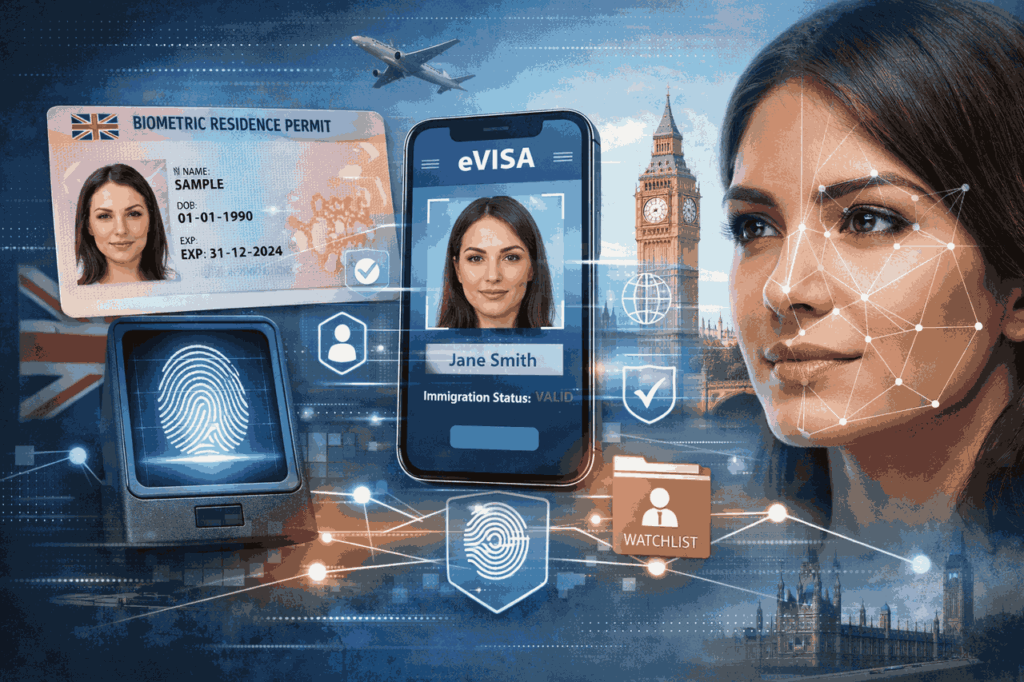
Biometrics are measurable physical characteristics used to confirm a person’s identity. Within the immigration system, this refers to an individual’s external physical features. These include fingerprints and a facial image.
For immigration purposes, biometric information consists of:
- A photograph of the individual’s face
- Images of their fingerprints
These identifiers are used to link a person’s biographic details such as their name, date of birth and nationality to their unique physical characteristics.
Why Biometrics Are Used
Biometrics support both security and facilitation within the border and immigration system. The facial image and fingerprints currently collected allow for reliable identity assurance and suitability checks for foreign nationals who are subject to immigration control.
The use of biometrics delivers three principal outcomes:
1. Establishing Identity
Biometric data is used to fix an individual’s biographic information to a single identity.
2. Verifying Identity
Biometrics enable accurate confirmation that a person matches an identity that has already been established.
3. Checking Suitability
Biometric information can be matched against other datasets, such as watchlists or fingerprint records, to assess whether a person is suitable for an immigration product.
When Biometrics Are Required
Biometric information must be provided as part of an application for an immigration product. This includes applications for visas and biometric immigration documents.
Biometrics are also taken from individuals who:
- Claim asylum
- Are in the UK and require leave
- Are unlawfully present in the UK
- Are arrested or detained under the Immigration Acts
- Are granted immigration bail
- Do not have sufficient documentation to confirm their identity or nationality
- Are subject to deportation
Biometric Immigration Documents (BIDs)
Biometric Immigration Documents were introduced under the Immigration (Biometric Registration) Regulations 2008. They provide secure and verifiable evidence of a person’s permission to stay in the UK and were designed to reduce identity abuse.
Previously, these documents were commonly issued as:
- Biometric Residence Permits (BRPs), or
- A vignette containing a facial image in a passport
Since 1 July 2021, BIDs have been issued in digital form as eVisas, although they may still be issued as a vignette containing a facial image in certain circumstances.
Biometric Residence Permits (BRPs)
BRPs were issued to individuals subject to immigration control who were granted permission to stay in the UK for more than six months and who did not hold status under the Withdrawal Agreement.
An application for leave exceeding six months, whether made inside or outside the UK, automatically resulted in a BRP being issued.
Transition to Digital Status
From 2018 onwards, UK Visas and Immigration began replacing physical immigration documents with digital proof of status in the form of an eVisa. This applies to both existing residents and new applicants.
Most BRPs expired on 31 December 2024. BIDs are now issued as eVisas rather than physical BRPs.
Although BRPs have largely been replaced, an expired BRP does not necessarily mean that the individual’s immigration permission has expired. A BRP may continue to be used for identification purposes for up to 18 months after its expiry.
Individuals who still hold valid immigration permission are encouraged to create a UKVI account in order to access their eVisa.
Features and Use
BRPs were secure polycarbonate cards containing a tamper-resistant chip. They included biometric data and details of immigration status.
A BRP enabled the holder to:
- Demonstrate immigration status
- Confirm identity for immigration purposes
- Access the online right to work service
- Access the online right to rent service
However, a BRP alone could not confirm a right to work or rent. Employers and landlords were required to use the relevant online checking services once the individual had shared their status information.
The eVisa
An eVisa is the digital form of a Biometric Immigration Document. It provides online confirmation of a person’s immigration status and contains their facial image and full name.
Individuals can access their status through a UKVI account and use the online service to:
- View their immigration status
- Share evidence of their rights and entitlements
People must keep their UKVI account updated, particularly when they obtain a new travel document, to ensure continued ability to travel.
By 2025, almost all physical immigration products and services will have been replaced by eVisas.
Biometric Residence Cards (BRCs)
Biometric Residence Cards were previously issued to non-EEA nationals who held a right to reside in the UK under European Union law or related provisions.
The legal basis for collecting biometric information for these cards was set out in the Immigration (Provision of Physical Data) Regulations 2006. Applications for EEA Rights BRCs closed in January 2021.
EU Settlement Scheme BRCs
Since 2018, BRCs have been issued under Appendix EU of the Immigration Rules to non-EEA nationals granted pre-settled or settled status under the EU Settlement Scheme.
Non-EEA family members of EEA citizens with status under the EU Settlement Scheme receive an EU Settlement Scheme BRC, together with access to their eVisa, unless they already hold an EEA Rights BRC.
The Home Office ceased issuing BRCs from 31 October 2024. Most BRCs expired at the end of 2024, although a small number issued before 2021 may display a later expiry date.
As with BRPs, a BRC cannot itself confirm a right to work or rent but can be used in conjunction with the online checking services.
Overseas Entry Clearance and eVisas
Individuals applying overseas for entry clearance for more than six months are normally required to enrol their biometric information. They are issued with a short-term entry clearance vignette in their travel document.
This vignette:
- Is valid for 90 days
- Begins on the intended date of travel stated in the application
Once in the UK, the individual must create a UKVI account to access their eVisa. Account registration forms part of the application process.
If the person does not travel within the 90-day validity period, they must apply for a replacement vignette. A fee will normally be payable and, in most circumstances, biometric information must be re-enrolled, as previously provided biometrics cannot generally be reused for overseas applications.
Conclusion
Biometrics are central to the operation of the UK immigration system. By linking facial images and fingerprints to an individual’s biographic details, the Home Office is able to establish and verify identity and assess suitability for immigration products.
The replacement of physical documents with eVisas represents a significant development in how immigration status is evidenced. Individuals must ensure that they maintain access to their UKVI account and keep their information up to date in order to demonstrate their rights and entitlements in the UK.
Follow us to stay updated on changes to UK immigration law, policy developments and guidance affecting migrants, employers and families.
With over 20 years of experience and a commitment to excellence, Morgan Smith Immigration is your trusted partner for all your immigration needs. Contact us today to learn more about how we can assist you with UK visa applications. For enquiries or assistance, call us at 0203 959 3335 or email [email protected].