


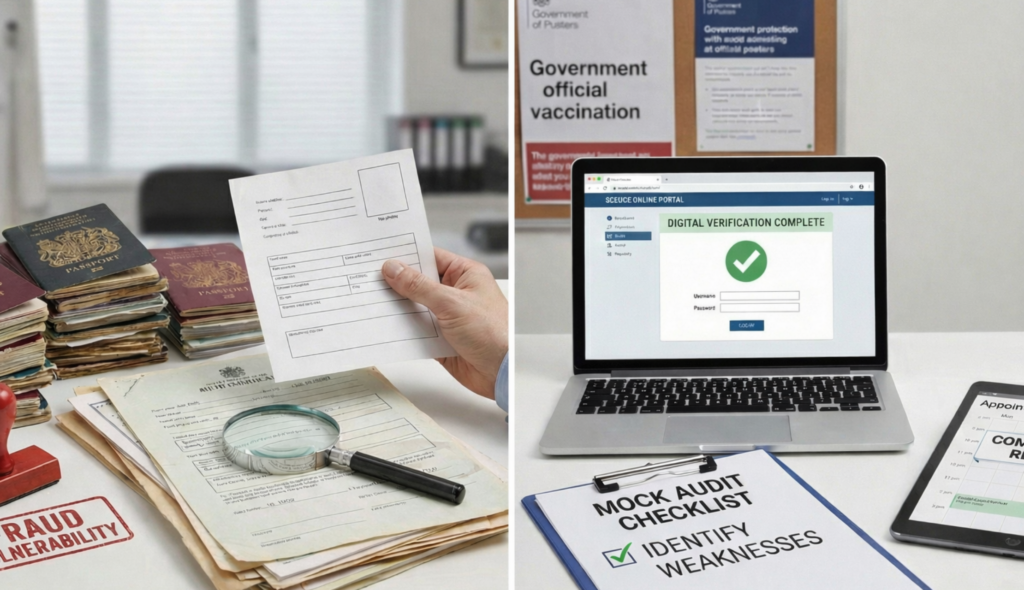
Right to work checks remain a fundamental compliance obligation for UK employers. While digital and online verification methods have significantly reduced the risk of fraud, manual right to work checks using physical documents continue to present heightened vulnerability, particularly where documents lack photographic or security features.
Understanding where these risks arise and how to identify weaknesses before they are exposed by the Home Office is essential. One of the most effective ways to do this is through a right to mock audit.
Why Physical Right to Work Documents Are More Easily Exploited
The introduction of Digital Verification Service (DVS) providers for British and Irish passport holders, alongside the widespread rollout of eVisas and online right to work checks for non-British and non-Irish nationals, has strengthened the overall right to work framework.
However, the Home Office still permits employers to rely on certain physical documents listed in Lists A and B of the Right to Work Checklist. Some of these documents contain minimal security features and do not include photographs, making them susceptible to misuse.
In particular, documents from List A are frequently targeted, as they provide a continuous statutory excuse for the duration of employment. Examples of higher-risk combinations include UK birth or adoption certificates and British naturalisation certificates, when relied upon alongside documents confirming a permanent National Insurance number.
While these documents may be genuine, they do not necessarily confirm that the individual presenting them is their rightful holder.
The Consequences of Inadequate Checks
Home Office guidance makes clear that an employer will not establish a statutory excuse if it is reasonably apparent that a document is false or does not belong to the person presenting it. This applies even where the document itself is genuine.
Failure to carry out compliant checks can result in civil penalties of up to £60,000 per illegal worker. In more serious cases, employers may also face criminal sanctions, including imprisonment and unlimited fines, where there is knowledge or reasonable cause to believe that illegal working is taking place.
How Mock Audits Help Identify and Reduce Risk
A right to work mock audit is designed to replicate the approach taken by the Home Office during an inspection. It provides employers with an opportunity to identify weaknesses in their processes, records and decision-making before enforcement action arises.
How we can help
If you require assistance with right to work compliance or would like to arrange a mock audit, please contact our team on 0203 959 3335 or email [email protected]. We can help you identify issues early and ensure your organisation is well-prepared for any Home Office scrutiny.