
Month: November 2025

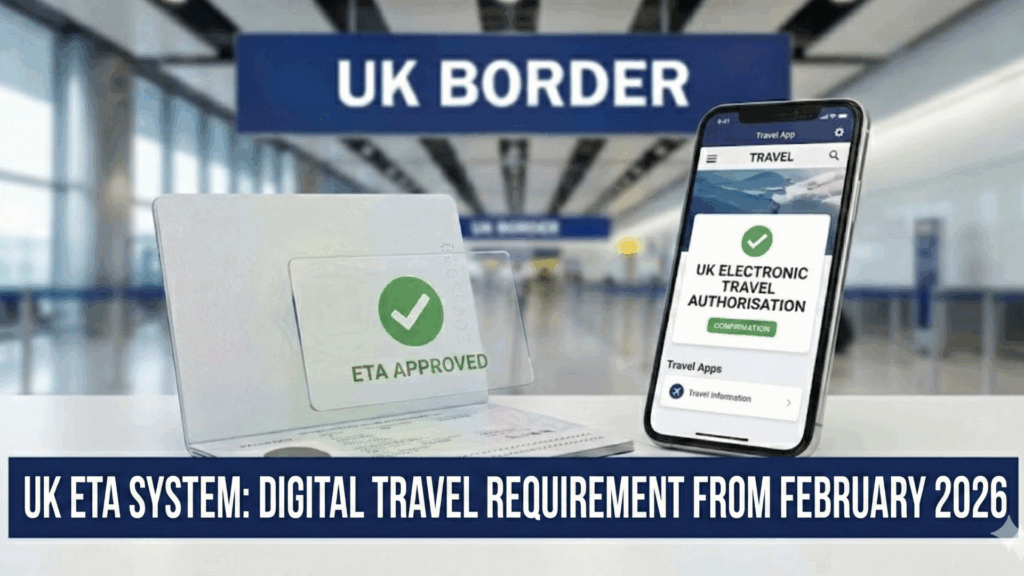
UK border scene showing a passport with ‘ETA approved’ stamp and a phone displaying Electronic Travel Authorisation (ETA) confirmation, highlighting digital entry from Feb 2026.

UK to begin enforcing Electronic Travel Authorisation (ETA) requirement from February 2026

From February 2026, the UK will move to full enforcement of its Electronic Travel Authorisation (ETA) scheme. This means that travellers who previously did not need a visa will no longer be able to travel to the UK without an Electronic Travel Authorisation (ETA).

UK to begin enforcing Electronic Travel Authorisation (ETA) requirement from February 2026 Read More »

UK Draws the Line: Record Pakistani Asylum Claims, Longer Settlement Route and a Tourist Levy Next 

Pakistan is now the leading source of asylum claims in the UK and the way many applicants are arriving matters as much as the headline total. At the same time, the Home Office is reshaping settlement rules to make permanent residence harder to secure without sustained lawful contribution, while ministers and city leaders are exploring new ways of funding public services through a potential London visitor levy. Taken together, these strands point to a broader shift: tighter control of status-switching, a longer road to indefinite leave to remain and a willingness to ask short-term visitors to contribute more directly to the costs of the system. 

UK Draws the Line: Record Pakistani Asylum Claims, Longer Settlement Route and a Tourist Levy Next  Read More »

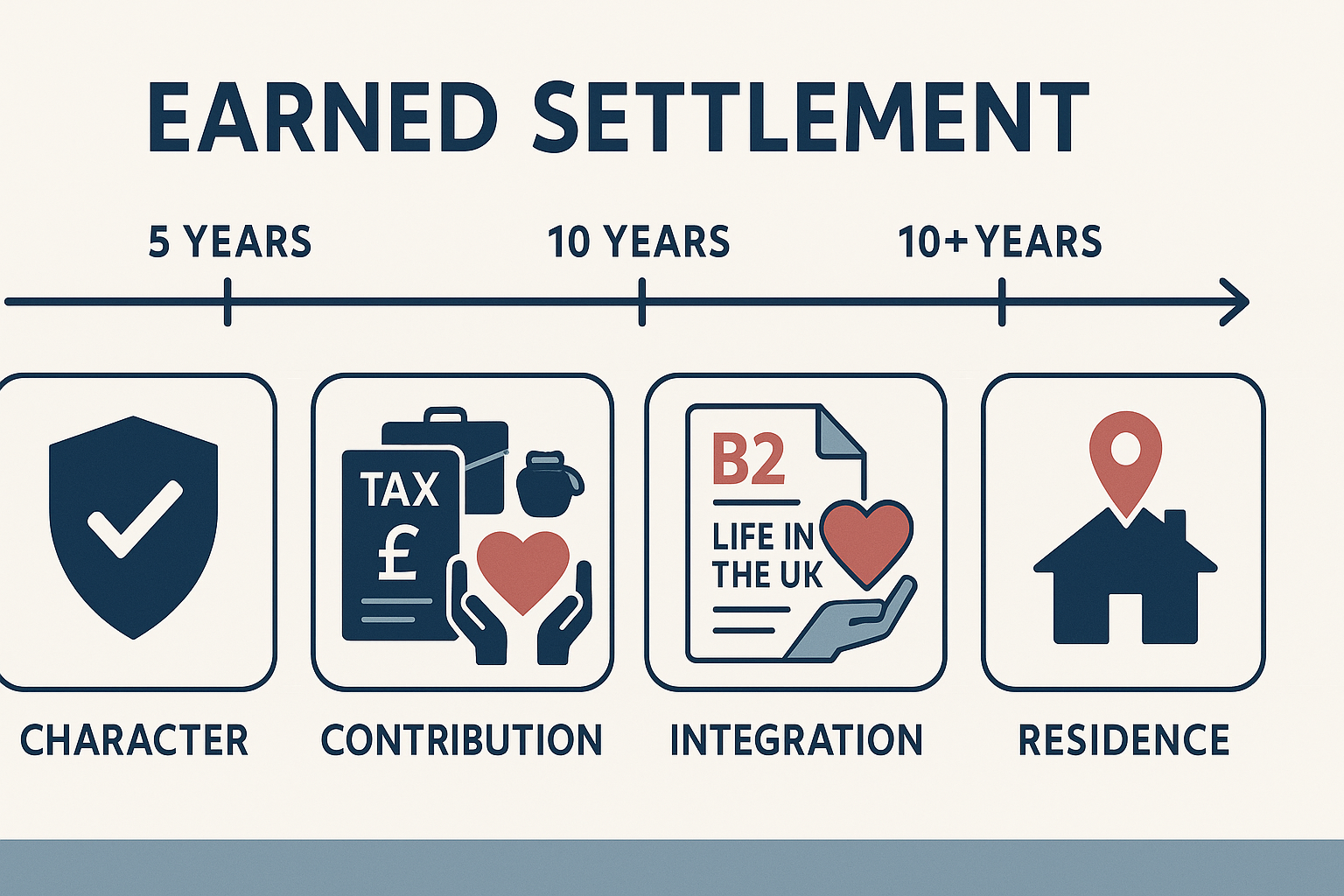
A modern illustration showing the UK’s Earned Settlement system, featuring a timeline from 5 to 10 years, icons for contribution, integration, character checks and community involvement, presented in official navy, white and muted red tones.

A New Era for ILR: Shabana Mahmood Introduces the Earned Settlement Framework

The Home Secretary, Shabana Mahmood, has set out detailed plans to overhaul how migrants qualify for settlement (Indefinite Leave to Remain – ILR) in the UK. Instead of settlement following automatically after a fixed period, the new model is built on the idea of earned settlement, permanent status granted only where a person can show long-term contribution, strong integration and a clean record. These proposals are set out in a government policy document and are now the subject of a formal consultation. They are not yet in force but they give a clear indication of the direction of travel.

A New Era for ILR: Shabana Mahmood Introduces the Earned Settlement Framework Read More »

A hyper-realistic image of a printed policy document titled “Restoring Order and Control,” placed on a wooden surface. The visible text outlines key sections of the UK’s Asylum and Returns Policy, highlighting reforms on protection, support and removals, visually reinforcing the article’s analysis of government asylum changes.

Restoring Order and Control: An Analysis of the Government’s Asylum and Returns Policy

The Home Secretary has now formally published the policy paper Restoring Order and Control: A statement on the government’s asylum and returns policy and presented it to Parliament, following several days of extensive briefing to the media. The paper sets out what is described as the most significant reform of the asylum system in a generation, framed around two central aims:

Restoring Order and Control: An Analysis of the Government’s Asylum and Returns Policy Read More »

Understanding Overseas Criminal Record Certificates for UK Visa Applicants

UK immigration system places great importance on safeguarding the public and ensuring that those who enter the country meet suitability requirements. One of the measures supporting this aim is the obligation for certain visa applicants to provide an overseas criminal record certificate. This requirement applies across several immigration categories and helps verify whether an individual has committed offences outside the UK.

Understanding Overseas Criminal Record Certificates for UK Visa Applicants Read More »

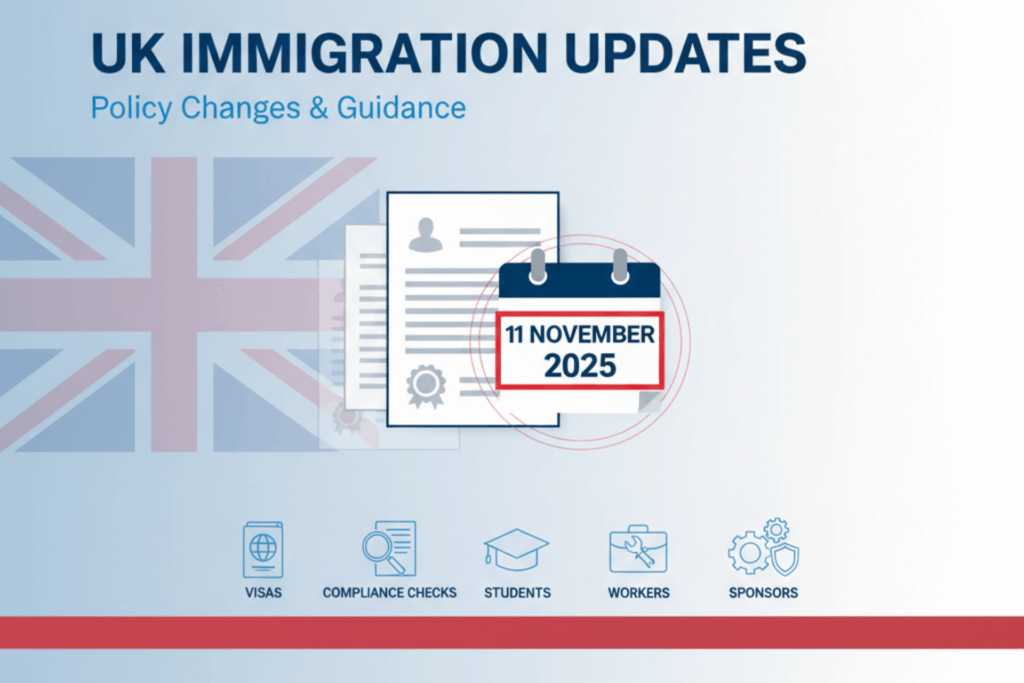
Graphic showing UK immigration updates with a Union Jack background, visa documents, and a calendar marked 11 November 2025, representing key policy changes for students, workers, and sponsors.

Major UK Immigration Changes Announced on 11 November 2025

Home Office has announced a series of reforms taking effect on 11 November 2025, bringing notable changes for sponsors, students, seasonal workers and family visa applicants. These updates form part of the Government’s wider approach to strengthening compliance, tightening safeguarding protections and adjusting financial thresholds in line with rising administrative demands.

Major UK Immigration Changes Announced on 11 November 2025 Read More »

Editorial illustration showing a Labour figure standing at a crossroads between ‘Compassion’ and ‘Control’ paths, symbolising Labour’s shift toward Denmark-inspired immigration policies once condemned under the Tories’ Rwanda plan, with Article 8 — Right to Family Life, subtly appearing in the background.

Labour’s Danish Dilemma: Following in the Footsteps of the Policies They Once Condemned

When the Conservative government unveiled its controversial Rwanda deportation scheme, Labour fiercely condemned it as inhumane, unworkable, and contrary to British values. Yet less than a year later, Labour’s Danish Dilemma emerges, with the same party now in power preparing to introduce one of the toughest immigration overhauls in decades, drawing direct inspiration from Denmark’s hardline asylum system. They have also examined Italy’s system, which operated along similar lines to the scheme proposed by the Tories, signalling an effort to explore comparable approaches within Europe.

Labour’s Danish Dilemma: Following in the Footsteps of the Policies They Once Condemned Read More »

HR professionals in a UK office reviewing a laptop showing a “Pending CoS Request” notice, symbolising delays in Certificate of Sponsorship allocations affecting employers.

How Delays in Certificate of Sponsorship Allocations Are Affecting UK Employers 

The consistency and timeliness of Certificate of Sponsorship (CoS) allocations by the Home Office have become a growing source of concern for UK employers and immigration practitioners alike. What was once a relatively straightforward process has become increasingly unpredictable, leaving sponsors and applicants alike struggling to plan effectively. 

How Delays in Certificate of Sponsorship Allocations Are Affecting UK Employers  Read More »

A confident international graduate in professional attire standing outside a modern London office building, holding a diploma folder. The image represents the transition from student life to a professional career under the UK Skilled Worker Visa route.

How to Switch from Student Visa to Skilled Worker Visa in the UK?

As international students near the completion of their studies in the UK, thoughts often turn towards the next step in their professional journey. For many, remaining in the UK to begin a career is an attractive option. However, doing so requires careful planning, particularly when it comes to switching immigration routes before the expiry of your current visa. Applying in good time not only ensures compliance with immigration rules but also helps avoid potential complications such as overstaying or application refusals.

How to Switch from Student Visa to Skilled Worker Visa in the UK? Read More »

Scroll to Top