


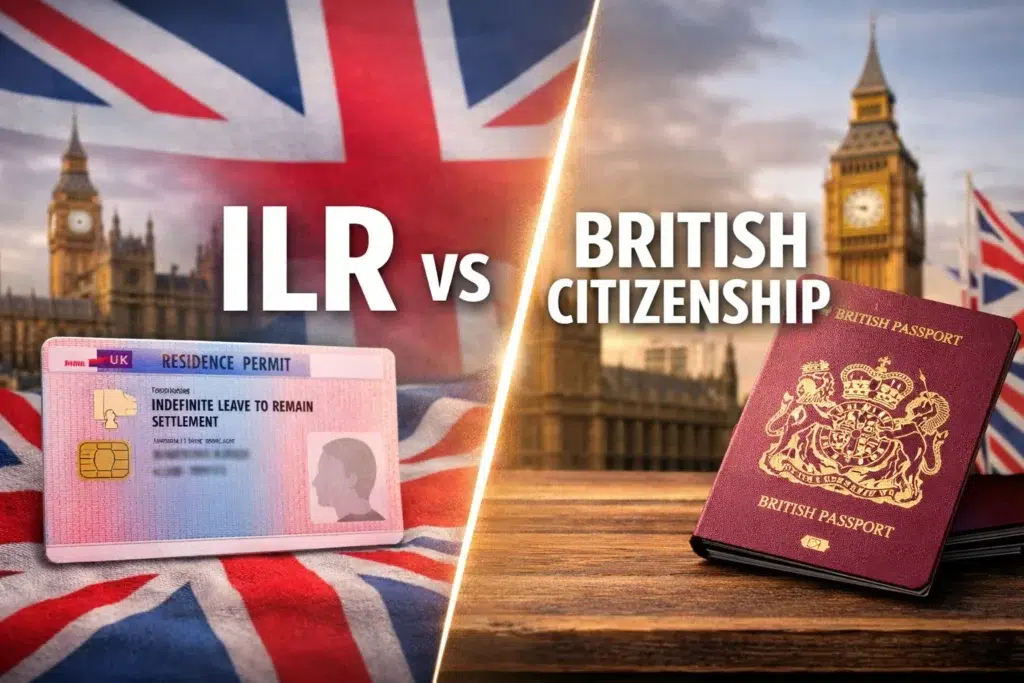
Many migrants who build their lives in the UK eventually face an important decision: should they stop at Indefinite Leave to Remain (ILR), or take the final step and apply for British citizenship? The two are frequently treated as interchangeable. In practice, they are very different legal statuses, with different levels of security, rights, responsibilities and long-term implications. Understanding those differences is essential before making what is often a significant financial and personal commitment.
This guide explains how ILR and British citizenship compare, including eligibility requirements, timelines, risks and practical considerations.
Indefinite Leave to Remain is a form of permanent immigration permission under UK law. It removes time restrictions on your stay and allows you to live in the UK without needing to extend a visa.
With ILR, you can live and work in the UK without restriction, study freely and access public funds if eligible. For many migrants, ILR represents long-term stability after years of temporary visa conditions.
However, ILR is not the same as citizenship. You cannot apply for a British passport, you cannot vote in UK general elections and your status can lapse if you spend more than two consecutive years outside the UK.
What Is British Citizenship?
British citizenship is nationality status, usually obtained through naturalisation. Once naturalised, you can apply for a British passport, vote in all UK elections and live abroad without risking your status.
Comparison Analysis: Indefinite Leave to Remain vs British Citizenship
Although Indefinite Leave to Remain and British citizenship are often spoken about as though they provide the same outcome, they differ fundamentally in legal status and long-term security. ILR is permanent residence granted under immigration law. It allows you to remain in the UK indefinitely, but you are still subject to immigration control. British citizenship, by contrast, is nationality status. It recognises you as fully British in law and removes immigration control entirely.
There are also clear differences in rights. ILR holders cannot vote in UK general elections or apply for a British passport. British citizens enjoy full political rights, can hold a British passport, and may live outside the UK without risking their status.
In practical terms, ILR provides permanent residence and stability. Citizenship provides permanence, full civic participation and stronger legal protection. The most appropriate option depends on your long-term plans, travel patterns and personal priorities.
Eligibility Requirements Compared
ILR eligibility is usually based on completing a qualifying period of lawful residence, commonly five years, although this varies depending on the immigration route. Applicants must meet residence, absence, English language and suitability requirements.
Citizenship applications involve stricter residence rules and a broader good character assessment. Applicants must already hold ILR, meet tighter absence limits and attend a citizenship ceremony if approved. The scrutiny applied to citizenship applications is generally higher.
Timelines: When Can You Apply?
Most migrants become eligible for ILR after five years on a qualifying visa route. After obtaining ILR, applicants usually need to wait a further 12 months before applying for citizenship, unless married to a British citizen.
Applying too early or miscalculating residence can result in refusal, so careful timing is essential.
Final Thoughts
Indefinite Leave to Remain and British citizenship both provide long-term security in the UK, but they serve different legal purposes. ILR secures your right to live in the UK without time restriction. Citizenship secures your status as British and removes immigration control entirely.
Understanding the distinction ensures you make an informed decision about the next stage of your immigration journey.
With over 20 years of experience and a commitment to excellence, Morgan Smith Immigration is your trusted partner for all your UK immigration matters. If you require professional guidance with your Indefinite Leave to Remain application or are considering taking the next step towards British citizenship, our experienced team is here to support you at every stage. Contact us today to discuss your circumstances and receive tailored advice. For any enquiries or assistance, call us at 0203 959 3335 or email [email protected].